19 Oct, 2026
Hardened compressed coco peat blocks frequently fail to yield their declared technical expansion volume during cultivation prep. This failure stems from uncalibrated mechanical settings on hydraulic pressing lines combined with uneven raw material moisture prior to molding. When an industrial press crushes the substrate beyond its natural elasticity limits, the outer shell forms a hardened, hydrophobic barrier that blocks water penetration. Regaining the natural capillary properties of coconut coir requires growers and agricultural technicians to understand fiber mechanics and apply precise rehydration protocols.
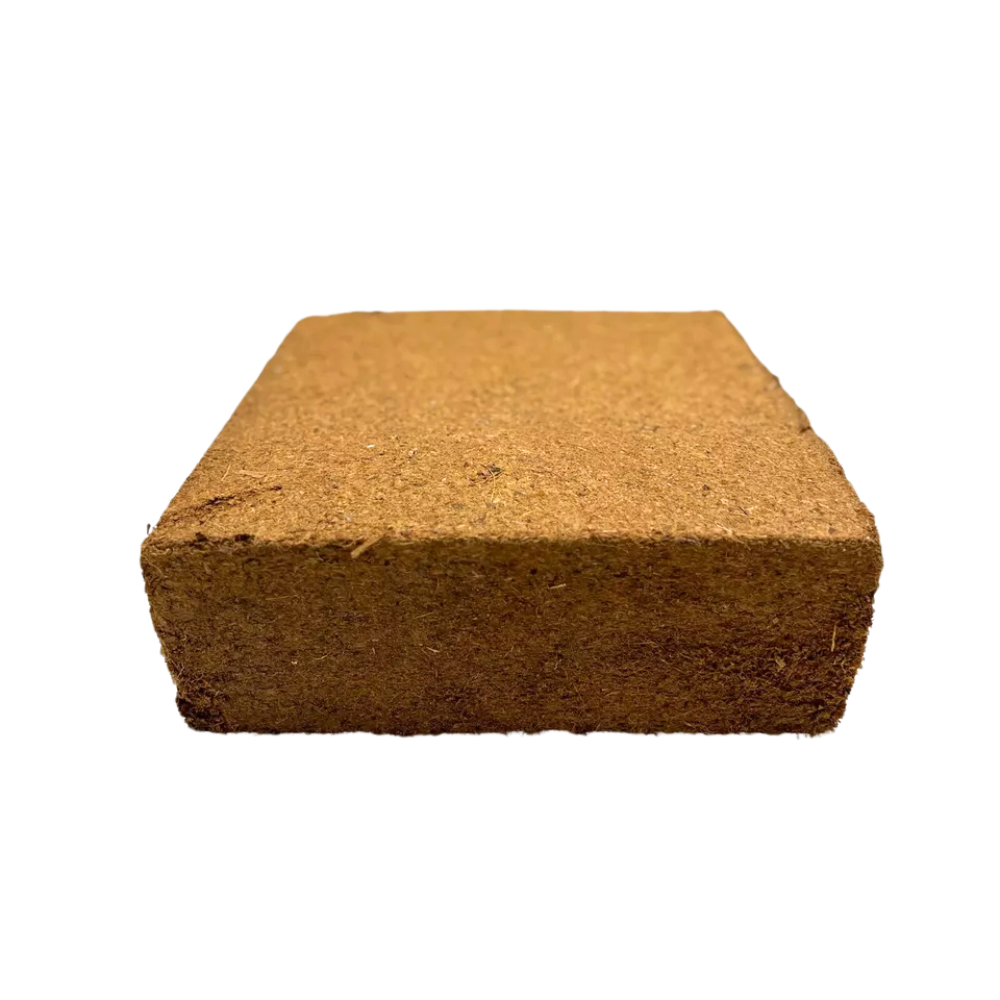
Hardened compressed coco peat blocks refer to coir substrate units compacted under excessive mechanical tonnage or subjected to prolonged dry storage, causing cellular coir fibers to collapse and lose their natural hydrophilicity. Upon immersion, the dense block resists hydration, maintains an unyielding hydrophobic shell, and drastically lowers aeration, restricting root respiration and crop establishment.
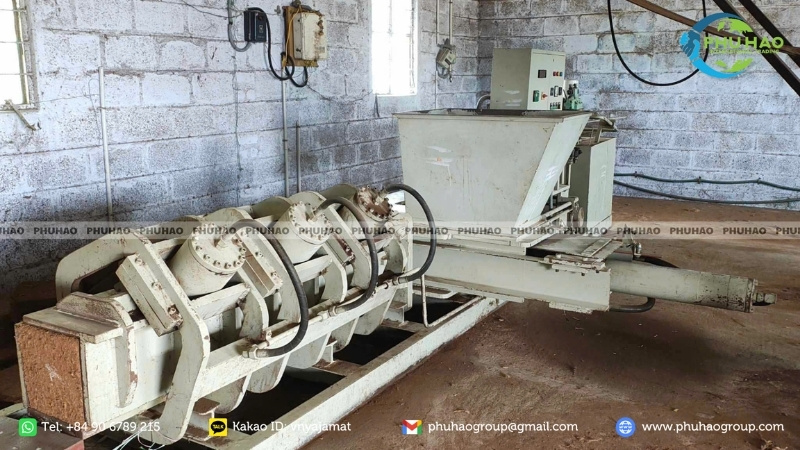
Modern hydraulic pressing lines at PHUHAOGROUP utilize calibrated tonnage settings to safeguard capillary micro-structures and eliminate hardened compressed coco peat blocks
A technical examination of coco peat compaction mechanics reveals that structural hardening does not merely result from low water content, but originates from systematic defects during industrial processing.
Standard industrial protocols mold 5kg coir units at a balanced 5:1 compaction ratio. However, when hydraulic machinery operates under uncalibrated pressure or applies excessive force to compress block dimensions for ocean freight savings, the micro-porous matrix of the pith collapses. Internal air pockets vanish, crushing the material into a hardened compressed coco peat block with extreme bulk density that permanently destroys elastic rebound upon re-wetting.
Raw material entering the press chamber must maintain an exact moisture window of 10% to 15%. If processors over-dry the coir pith below 8%, the organic particles lose their flexible moisture film. Conversely, moisture levels above 20% generate intense frictional heat during hydraulic piston strokes, melting natural tannins and lignin into an impermeable glaze across the particle surfaces. This thermally denatured organic coating solidifies into hardened compressed coco peat blocks, forming a barrier that halts liquid migration into the block core.
Mechanical deformation of the organic medium disrupts nursery workflow and introduces direct financial losses and crop health hazards throughout the growing cycle.
A standard 5kg unit should yield an expansion volume 70–75L. When handling hardened compressed coco peat blocks, actual tank recovery typically peaks at only 40 to 50 liters. This volume loss of over 30% forces commercial greenhouses to purchase additional pallets to fill containers, increasing raw substrate expenses well beyond initial budgets.
Sustained use of hardened compressed coco peat blocks destroys the natural aerated porosity of the rhizosphere. Crushed under extreme mechanical loads, delicate fibers crumble into fine dust, reducing air-filled porosity below 10%. Consequently, hydrated substrate turns sludgy and retains stagnant water, which suffocates active root tips and generates anaerobic environments where pathogenic fungi cause root rot.
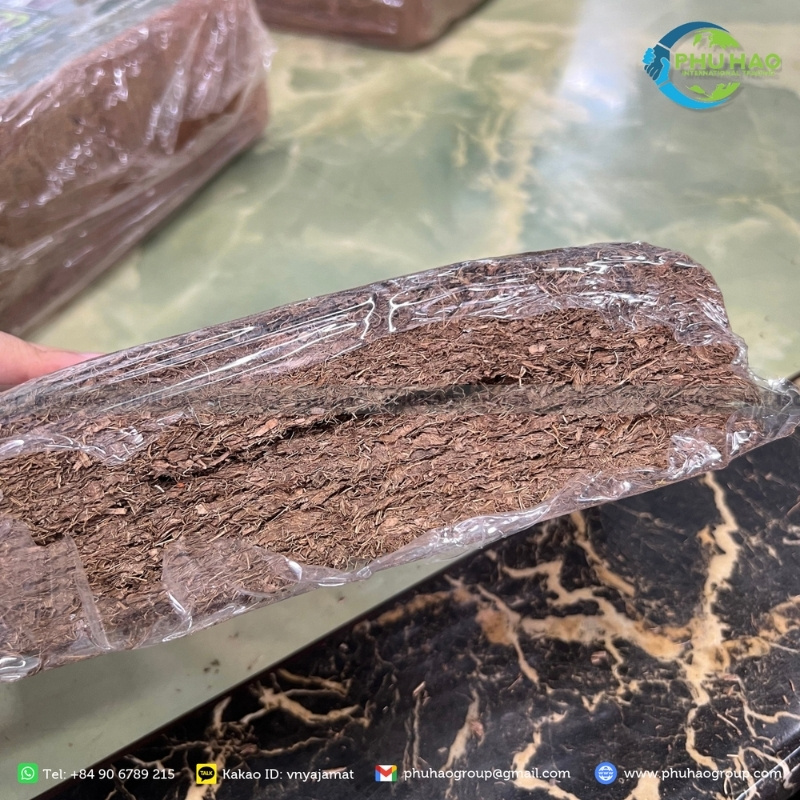
Substrates derived from a hardened block remain dense and waterlogged after soaking, impeding root oxygen exchange and driving severe root rot outbreaks
Restoring capillary intake requires technicians to apply thermodynamic rehydration techniques that break closed hydrogen bonds within the compacted cellulose matrix.
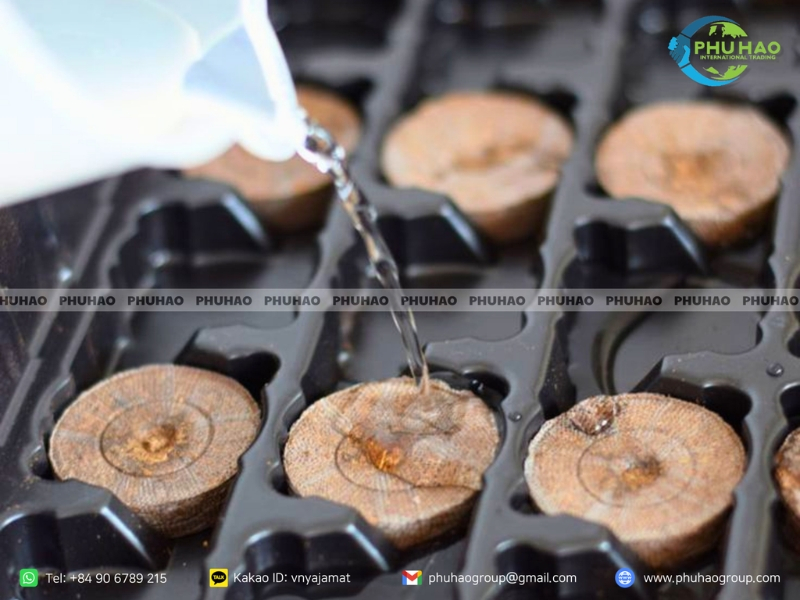
Implementing warm water soaking between 40°C and 50°C provides the most reliable remedy for hardened compressed coco peat blocks. Elevated water temperature dissolves the glazed outer lignin seal and accelerates deep moisture penetration directly to the core. Apply 15 to 18 liters of warm water for every 5kg block via low-pressure spray or half-submersion to induce upward capillary action.
| Stage | Technical Procedure | Water Temperature & Volume | Soaking Duration | Target Objective |
| Step 1: Dissolve Glazed Film | Spray or submerge 1/2 of the block height | Warm water 40°C – 50°C (10 Liters) | 10–15 minutes | Lower surface tension and break down denatured lignin |
| Step 2: Hydrate Core | Add second water batch and flip block | Standard warm water (5–8 Liters) | 10 minutes | Drive reverse capillary suction into block core |
| Step 3: Loosen Fibers | Manually rake or run low-speed shredder | No added water | Immediately after saturation | Attain 70–75L volume while preserving fiber aerated porosity |
After 15 to 20 minutes in warm water, the outer layers of the hardened compressed coco peat blocks soften and detach. Technicians should turn the block using flat shovels or hand rakes, directing remaining moisture toward dry sections. Avoid using blunt mechanical tools or heavy hammers, which fracture delicate fibers. Decompact the material gently by hand or through slow-speed rotary rakes to expand the volume fully into a soft, airy, and high-yield growing substrate.
>>> READ MORE: Export Coco Peat Technical Standards: Reference Chart For EC, pH, And Moisture Under RHP Guidelines
Does extended warehouse storage cause coir blocks to harden?
Extended storage in hot, dry environments evaporates internal bound moisture, producing hardened compressed coco peat blocks that resist water absorption.
Can boiling water rehydrate over-compacted coir blocks?
Use warm water between 40°C and 50°C. Avoid 100°C boiling water, as extreme heat degrades cellulose walls and causes soaked coir to turn mushy.
Should growers loosen hard blocks manually or with mechanical shredders?
Rake the substrate manually once the block reaches saturation. High-speed shredding machinery shears coconut fibers into unwanted fine dust.
Strict raw material quality control and calibrated pressing parameters protect root health and crop productivity. Understanding mechanical and moisture thresholds removes the risk of hardened compressed coco peat blocks, unlocking maximum physical porosity and yield for modern agricultural operations. Sourcing blocks manufactured under strict pressure-controlled protocols ensures substrate uniformity across every hectare. Contact PHUHAOGROUP immediately via phone at +84 90 6789 215 to secure high-quality substrate supplies, eliminate hardened compressed coco peat blocks, and optimize crop yields for your upcoming season.
Contact us for a detailed FOB & CNF quotation:
PHU HAO INTERNATIONAL TRADING CO., LTD (PHUHAOGROUP)
📞 Tel/WhatsApp/WeChat/Zalo: +84 906 789 215
📧 Email: phuhaogroup@gmail.com / henry@phuhaogroup.com
🌐 Website: www.phuhaogroup.com
🏬 Alibaba: phuhaogroup.trustpass.alibaba.com
▶️ YouTube: @phuhaogroup
You have0products in your cart
There are no products in the cart.
Total order price