28 Sep, 2026
Coir rope export packing directly determines whether natural fibers preserve their baseline quality during long sea voyages. To prevent mildew, fiber unwinding, and geometric distortion, technicians monitor every step closely, from twisting and strap-tensioning to container stuffing at regional processing hubs. Identifying whether destination ports handle cargo mechanically or manually establishes the exact winding specification required. Applying precise coir rope export packing methods cuts logistics overhead and secures physical product integrity upon arrival.
Coir rope export packing operates at peak efficiency by keeping internal core moisture below 15% before final winding. Operators apply multi-point heat-sealed PP strapping to lock outer coils and neutralize fiber expansion forces. Combining this binding step with loose-stowage techniques fully exploits 40HC container volume.
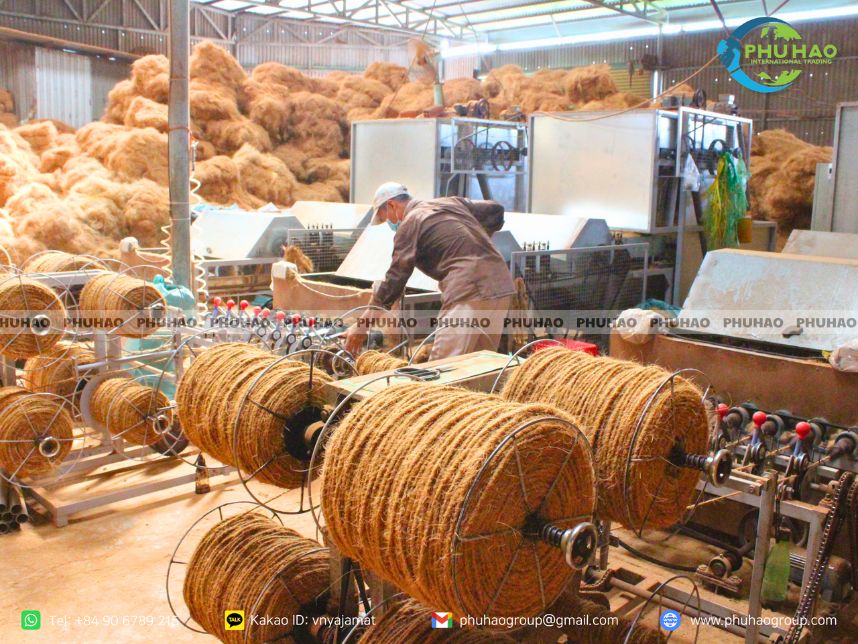
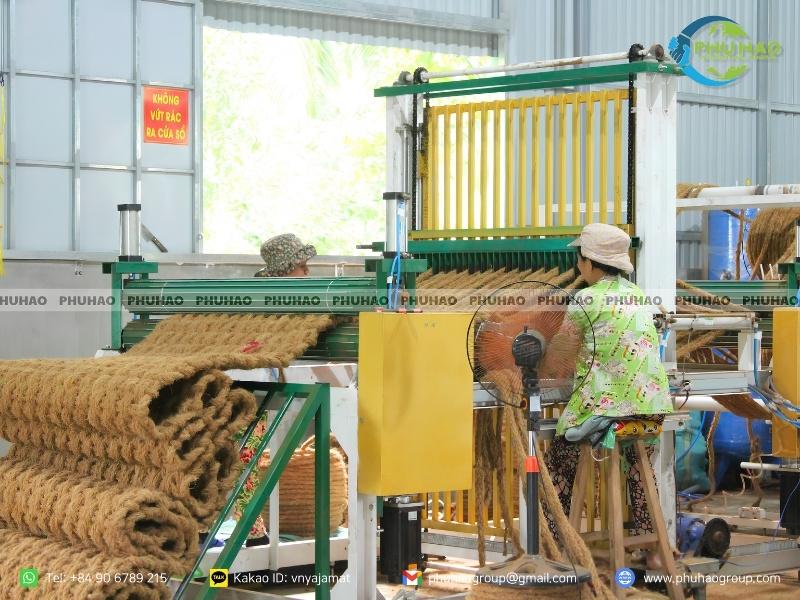
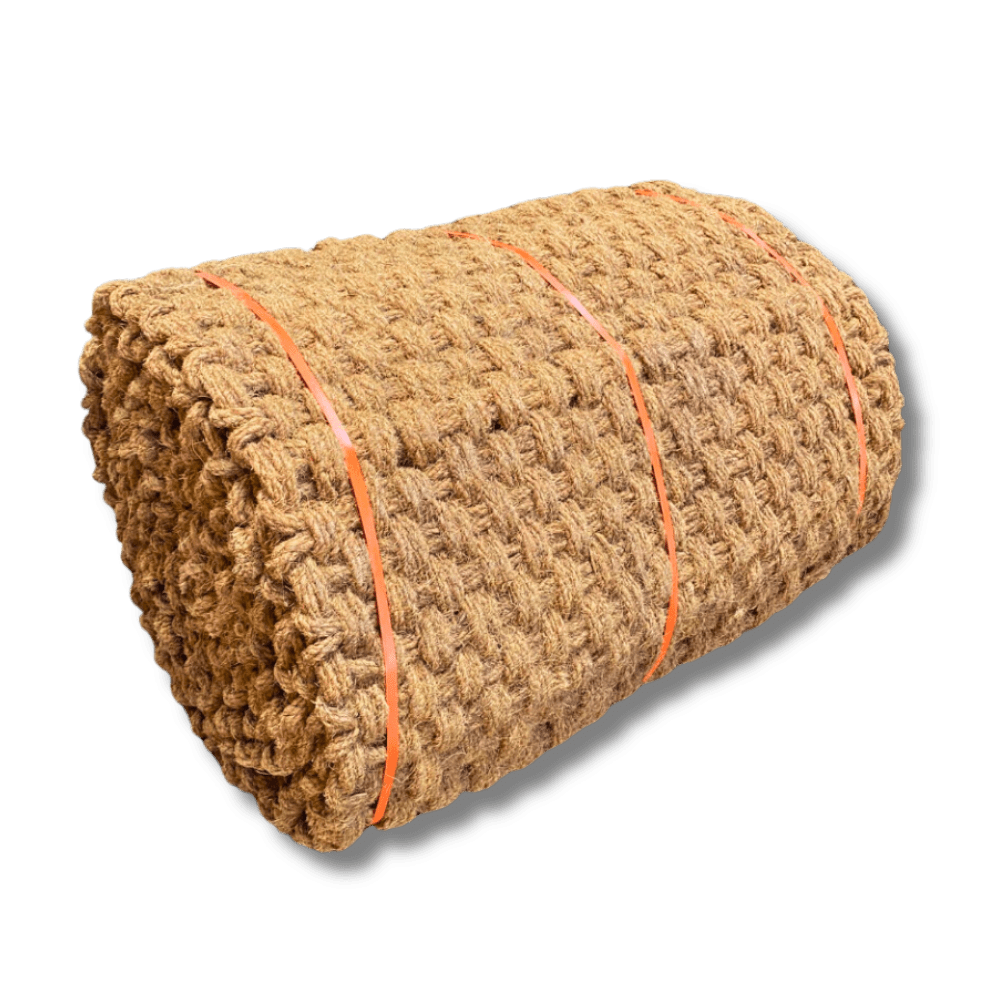
Finished coir rope export packing line meeting weight tolerance specifications prior to technical inspections
Depending on whether downstream projects deploy automated unwinding rigs or manual labor, manufacturers package products into two core formats: rigid-core coils and compressed coreless coils. Each coir rope export packing standard provides clear operational advantages tailored to jobsite handling conditions.
Centering the coil around a rigid plastic core preserves concentric geometry under heavy stacking loads and prevents mechanical crushing. The structural core resists torsional deformation, allowing automated geo-mat looms and farm dispensers to pay out fiber smoothly without snagging. Cored coir rope export packing remains the primary option for fully automated processing lines.
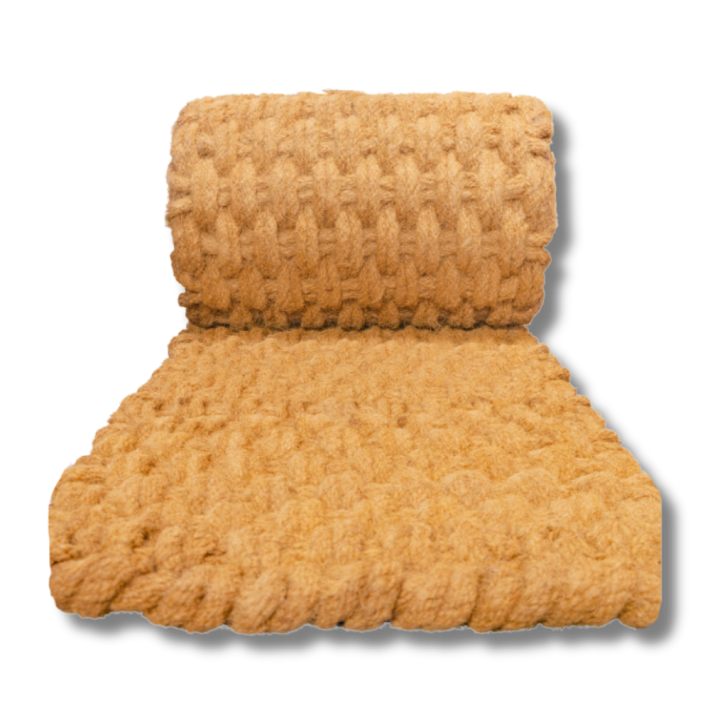
Manufacturing a coreless coir coil eliminates packaging waste and reduces post-consumer scrap on construction sites. The winder distributes rope evenly from the center out under constant mechanical tension before workers secure the bundle with heat-welded plastic strapping. This format dominates shipments specified at 30 kg- 40 kg, offering easy field handling along riverbank erosion control installations. The coreless coir rope export packing method requires precise center tensioning to prevent center-hole collapse when stacked. Through tight winding control, this coir rope export packing setup maintains rigid geometry throughout warehouse staging.
>>> READ MORE: Black Mold On Coir Rope During Storage: Moisture Standards And Preservation Protocols To Prevent Tensile Loss
A 40HC container provides roughly 76 CBM with an interior ceiling height of 2.69m, making it ideal for dense loose-stowage configurations. However, coir rope export packing must incorporate a structured loading layout to arrest lateral momentum caused by oceanic roll. Technicians calculate every tier so the coir rope export packing system delivers optimal load-bearing strength across extended ocean routes.
| Coil Packing Method | 40HC Stacking Pattern | Load-Bearing Mechanism | Performance Benefit |
| Cored Coil | Vertical on-end, core axis upright | Plastic core absorbs direct vertical pressure | Prevents fiber flattening |
| Coreless Coil | Staggered interlocking brick pattern across tiers | Adjacent coils wedge into voids to cross-lock | Suppresses cargo movement, maximizes CBM |
For spooled coils, loaders stand each unit upright with the central core opening pointing toward the container ceiling. The vertical core transfers downward compression from overhead tiers straight into the steel flooring, eliminating lateral loads that crush natural coir fibers.
Interlocking edge supports protect coil integrity even during high-tonnage crossings. Adhering to standardized manual stowage ensures that the entire lot meets technical tolerances at the discharge port. The structural stability of vertical coir rope export packing represents the central safeguard for high-value cargo.
For coreless units, a staggered brickwork configuration eliminates spatial gaps between cylindrical items. Upper coils rest directly into the recesses created by two underlying units, generating a self-bracing matrix that absorbs marine vibration.
This coir rope export packing approach maximizes internal cubic space, helping shipments consistently reach their payload target of cont 40HC 20 tons. The dense layout significantly drives down freight costs per linear meter of coir rope. By optimizing every cubic foot, staggered compressed coir rope export packing provides an exceptional weight-to-volume freight ratio.
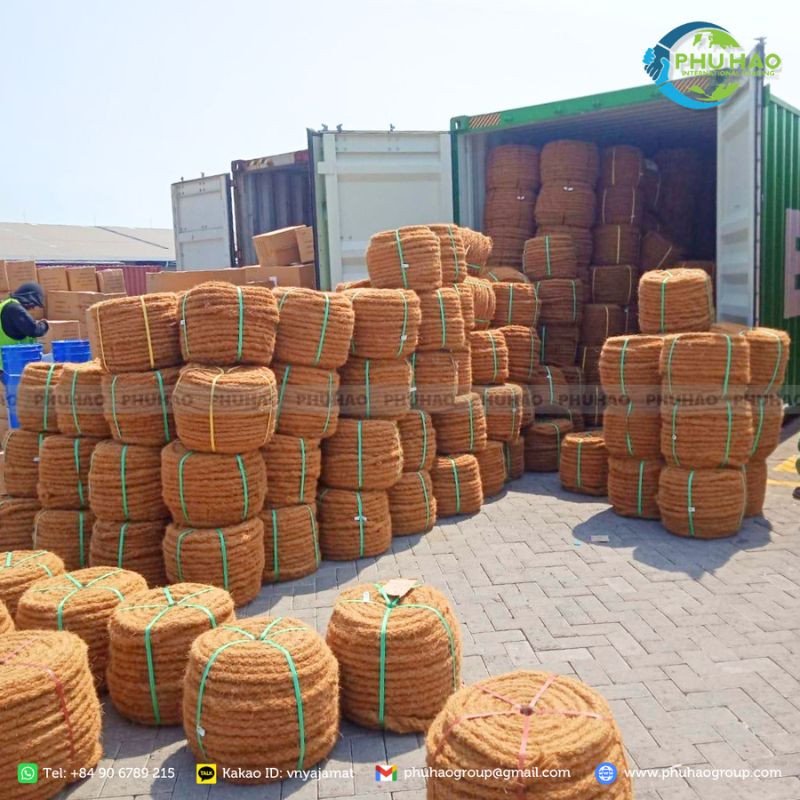
Staggered stowage of coir rope coils into a 40HC container, maximizing CBM and dampening transit movement
Alt: Coir rope export packing and stuffing process into a 40HC container
Caption: .
Moisture regulation and bio-sanitation prevent decay, mold, and fiber breakdown during transit. Comprehensive coir rope export packing protocols synchronize factory-level drying with certified pest control before customs officials seal the container doors.
Safe coir rope export packing requires strict moisture limits between 12% and 15%. Technicians reroute any batch exceeding 16% back to convection drying ovens or solar drying patios to eliminate internal heat buildup. This pre-treatment step allows coir rope export packing to preserve the yarn’s golden tone and tensile rating.
Every coir export consignment must undergo heat treatment or precise Methyl Bromide fumigation.
| Inspection Parameter | Technical Target | Verification Method |
| Core Moisture | 12% – 15% Max | Pin-type contact moisture meter |
| Pest Sterilization | 100% insect-free | Official Fumigation Certificate |
| Bundle Strapping | Virgin PP strapping | Pneumatic or electric friction-weld tool |
Fumigation and phytosanitary certificates must align with ocean bill of lading details. Pairing coir rope export packing with industrial container desiccants curbs interior condensation, keeping natural strands dry. Consequently, standardized coir rope export packing expedites port entry and clears destination customs without hold-ups.
>>> WATCH MORE: Packaging Specifications & Container Loading Standards At Phu Hao
How do cored coils differ from coreless coils?
Cored coils utilize a rigid center tube suited for automated machine unwinding, whereas coreless coils feature a solid compressed winding that minimizes tare weight.
Which winding style works best for agricultural exports?
Choose coreless coils to reduce freight overhead when crews lay rope manually. Select cored coils when client worksites use automated unwinding equipment.
What shipping documents are necessary to clear coir rope into South Korea?
Exporters need the Commercial Invoice, Packing List, Bill of Lading, Certificate of Origin (C/O Form AK or VK), Phytosanitary Certificate, and Fumigation Certificate.
How do operators stop coils from unraveling or deforming during offloading?
Secure coils with 4-point heat-sealed PP straps and handle them in an upright, vertical orientation during unstuffing.
Standardized coir rope export packing provides the operational foundation that agricultural by-product manufacturers need to build international credibility. Strict oversight of tensile strength, winding compression, and core moisture safeguards fiber performance across transoceanic shipping schedules. Precision strapping and deliberate 40HC container layout plans prevent physical crushing while optimizing payload volume. Understanding global shipping parameters empowers trade operators to schedule secure, cost-controlled deliveries worldwide.
Contact us for a detailed FOB & CNF quotation:
PHU HAO INTERNATIONAL TRADING CO., LTD (PHUHAOGROUP)
📞 Tel/WhatsApp/WeChat/Zalo: +84 906 789 215
📧 Email: phuhaogroup@gmail.com / henry@phuhaogroup.com
🌐 Website: www.phuhaogroup.com
🏬 Alibaba: phuhaogroup.trustpass.alibaba.com
▶️ YouTube: @phuhaogroup
You have0products in your cart
There are no products in the cart.
Total order price