20 Oct, 2026
Compressed coco peat pellet technology represents a major shift toward sustainable growing media across modern high-tech agriculture. Developed from abundant Ben Tre coconut husk by-products, this next-generation substrate system resolves the inherent drawbacks of traditional bagged media, including uneven compaction, high residual lignin and tannin levels that suffocate root systems, and structural deformation on mechanized handling lines. Through precise physical and biochemical processing, this compressed substrate system delivers a comprehensive solution for industrial nurseries, driving higher commercial propagation yields.
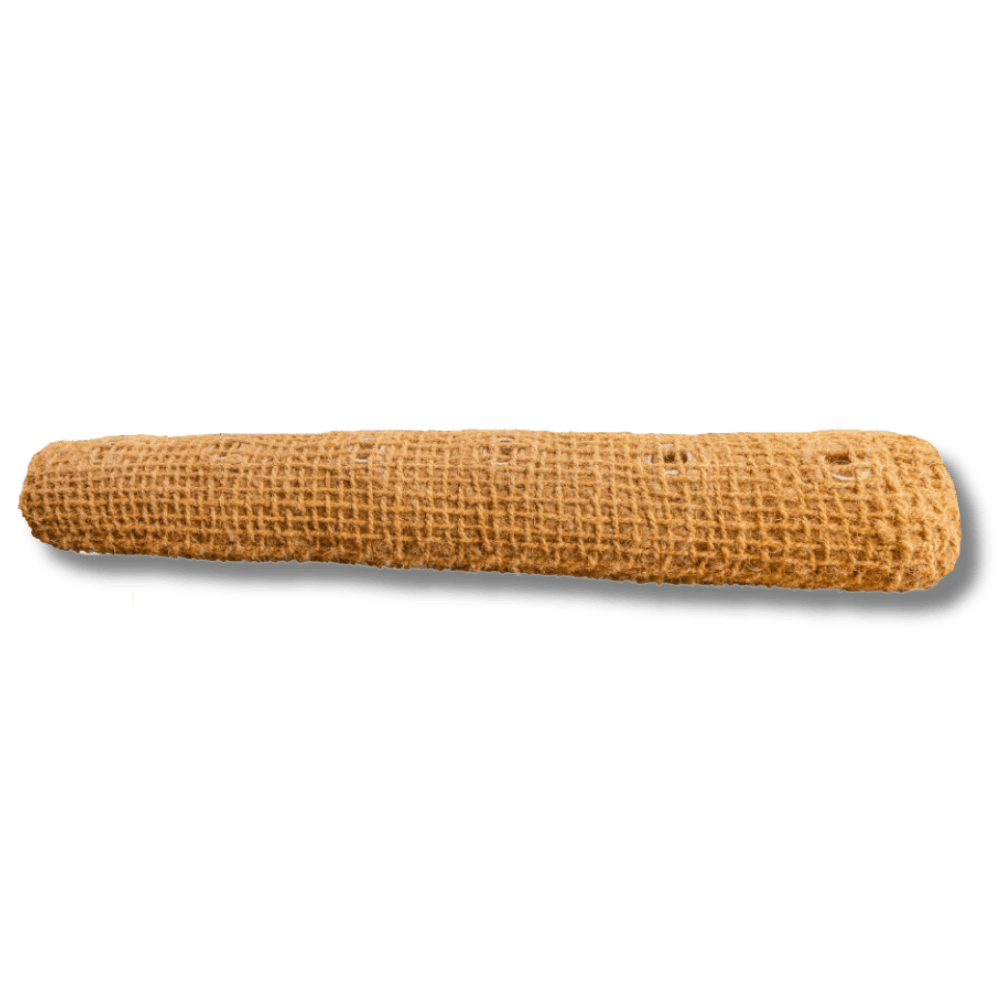
Compressed coco peat pellet technology provides a high-density, pre-formed ecological substrate manufactured from pure coco peat. The design integrates natural coconut capillary structures with an internationally certified biodegradable outer wrap. This configuration balances moisture retention and aeration, establishing optimal conditions for seed germination.
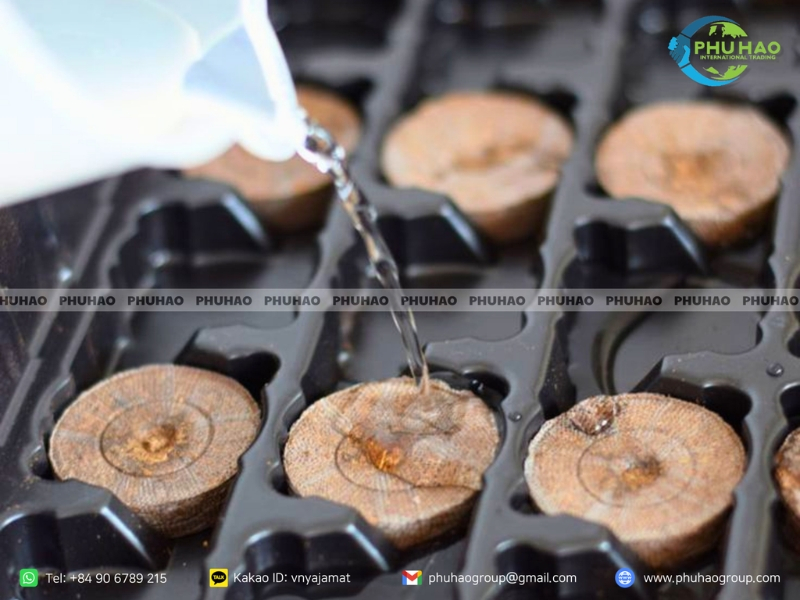
Compressed coco peat pellet technology expands rapidly upon contact with water
Breakthroughs in compressed coco peat pellet technology center on an ultra-fast hydraulic response when exposed to water, which prompts the micro-cavity network within the coir fiber to recover its natural volume.
Graded coconut fibers feature porous characteristics that establish a uniform micro-capillary network throughout the compressed volume. When hydrated, capillary action draws water upward from the base to the surface at an equal rate. This action releases mechanical bonds and allows products made with compressed coco peat pellet technology to expand completely in 3 minutes without snapping individual fibers.
A biodegradable non-woven fabric wrap protects the structural stability of plugs engineered with compressed coco peat pellet technology. This biopolymer jacket prevents substrate washout under high-pressure irrigation and triggers natural air-pruning, enabling lateral root branching without root spiraling or constriction.
Strict control over the microclimate surrounding each seed establishes the foundation for peak survival rates in the nursery. By adopting compressed coco peat pellet technology, commercial growers eliminate the risks associated with manual substrate mixing errors.
In professional horticulture, balancing the liquid phase (water) with the gas phase (oxygen) determines embryonic vigor. Substrates produced with compressed coco peat pellet technology maintain an Air-Filled Porosity (AFP) between 18% and 22% even when saturated. This precise balance between capillary micropores and macropores prevents waterlogging and damping off while supplying continuous oxygen for embryonic cellular respiration. An oxygenated root zone stimulates root hair elongation, encourages uniform moisture uptake, and rapidly transforms seeds into robust seedlings, helping large-scale facilities reach a 98% germination rate.
Modern commercial greenhouses rely on automated equipment that demands millimeter-level precision from every consumable. Export-grade coco pellets maintain a dry diameter tolerance of less than 0.5 mm. When loaded into specialized nursery trays, these pellets allow vacuum seed nozzles to deposit seeds directly into the center hole with pinpoint accuracy. This precise mechanical compatibility integrates smoothly into automated seedling propagation lines, eliminating labor-intensive manual sowing and preventing mechanical jams during continuous, high-speed operation.
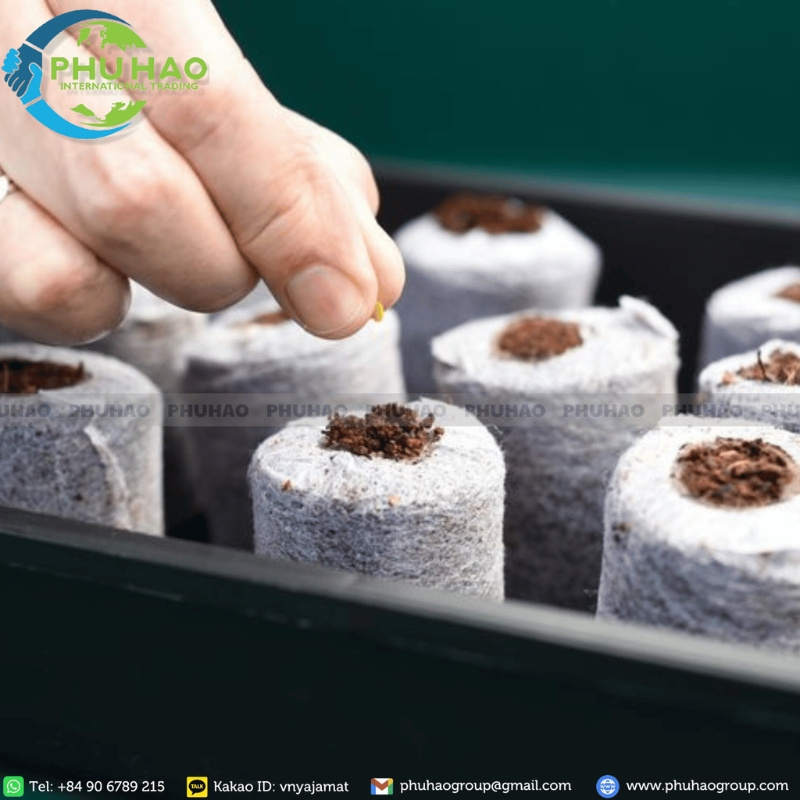
Uniform plug dimensions provide optimal conditions for automated tray indexing lines
Raw coconut husks contain high concentrations of soluble salt ions, such as sodium (Na+), potassium (K+), and chloride (Cl-), along with high-molecular-weight polyphenols (tannins and lignin). Without strict biochemical treatment, these compounds scorch roots, burn foliage, and inhibit seed germination.
| Physicochemical Parameter / Metric | Raw Coco Coir (Untreated) | PHUHAOGROUP Pellet Standard | Impact on Germinating Roots |
| Electrical Conductivity (EC) | > 2.5 mS/cm (saline) | < 0.5 mS/cm (Low EC, RHP standard) | Prevents root tip scorching and osmotic shock |
| pH Level | 4.5 – 5.0 (sour, highly acidic) | 5.5 – 6.5 (biological buffer range) | Maximizes calcium and magnesium absorption |
| Residual Tannins & Lignin | High (causes precipitation and root burn) | Thoroughly washed and neutralized | Avoids inhibiting embryonic respiratory enzymes |
| Coir Pith / Fiber Ratio | Inconsistent, excessive dust | Standardized 95/5 ratio | Guarantees optimal aeration and water retention |
| Expansion Time | Irregular shape | Expands uniformly within 3 minutes | Integrates smoothly with automated seeding trays |
At PHUHAOGROUP’s ecological processing facilities in Ben Tre, raw coconut husks undergo mechanical separation followed by multiple closed-loop freshwater washing cycles. Soaking, washing, and tannin-removal techniques isolate and remove precipitated tannins and free soluble lignin. Rigorous control over mineral salt residues lowers the electrical conductivity (EC) of compressed coco peat pellet technology to a biologically safe standard below 0.5 mS/cm. This thorough purification creates a pathogen-free growing medium that prevents osmotic shock when delicate young radicles contact the coir, protecting root tips for uninterrupted development.
Beyond initial salt and tannin washing, applying compressed coco peat pellet technology incorporates intensive cation buffering with calcium nitrate, Ca(NO3)2, to stabilize pH between 5.5 and 6.5. This ion exchange releases readily absorbable calcium and magnesium to young plants while curbing nitrogen immobilization and micronutrient toxicity. Such physicochemical stability establishes a safe nutrient buffer, encouraging roots to colonize the entire plug volume. Because the breathable biopolymer membrane holds the plug intact, nursery managers can transplant seedlings directly into field beds or larger containers without tearing the wrap, preserving fragile root structures and eliminating transplant shock or growth delays.
>>> READ MORE: Comparing Treated Coco Peat And Unwashed Raw Coco Peat: Drainage Water Costs And Root Safety Analysis
How do coco peat pellets differ from traditional bagged coco peat?
Products manufactured with compressed coco peat pellet technology undergo rigorous tannin removal, sterilization, precise volumetric sizing, and wrapping in a biodegradable membrane, preventing structural breakdown during irrigation.
Do coco peat pellets fit automated seeding machine trays?
Yes. Dry pellet dimensions measure a standard 3.5 cm x 1 cm or 4.2 cm x 1 cm (5–10 g), fitting automated nursery trays accurately.
Do growers need to tear away the outer fabric wrap when transplanting seedlings into the soil?
Growers do not need to remove the fabric because the biodegradable non-woven fabric wrap decomposes naturally, allowing roots to penetrate the membrane freely.
How long can dry coir pellets be stored without molding or losing expansion capacity?
Standardized thermal drying in compressed coco peat pellet technology preserves expansion capability and mold resistance for over 24 months when stored in a dry environment.
Adopting compressed coco peat pellet technology opens a sustainable path for commercial nurseries, optimizing warehouse storage space, reducing freight costs, and cutting manual potting labor. Standardized, uniform plugs liberate growers from relying on traditional soil substrates burdened with soil-borne pathogens and debris. By maintaining balanced moisture, shielding root tips, and integrating with automated nursery lines, compressed coco peat pellet technology acts as a powerful driver to elevate nursery throughput and commercial value for high-value agricultural crops.
Contact us for a detailed FOB & CNF quotation:
PHU HAO INTERNATIONAL TRADING CO., LTD (PHUHAOGROUP)
📞 Tel/WhatsApp/WeChat/Zalo: +84 906 789 215
📧 Email: phuhaogroup@gmail.com / henry@phuhaogroup.com
🌐 Website: www.phuhaogroup.com
🏬 Alibaba: phuhaogroup.trustpass.alibaba.com
▶️ YouTube: @phuhaogroup
You have0products in your cart
There are no products in the cart.
Total order price