19 Oct, 2026
Comparing treated coco peat and unwashed raw coco peat serves as a core technical evaluation that helps high-tech farms preserve germination rates, stimulate root establishment, and optimize crop production budgets. In nursery and hydroponic systems, operational performance between these two material grades diverges sharply across electrical conductivity (EC) thresholds, pH levels, and the leaching dynamics of soluble organic compounds. Selecting the wrong starting media wastes operational capital, induces seedling root toxicity, and triggers widespread yield declines across subsequent cultivation cycles.
Comparing treated coco peat and unwashed raw coco peat helps commercial growers clarify the differences between raw substrate and ecologically standardized growing media. This comparison establishes precise quantitative benchmarks for tannin and lignin concentrations, as well as operational EC and pH thresholds. Growers protect tender root tips against chemical burning, reduce on-site processing expenses, and optimize nutrient availability for young crops.
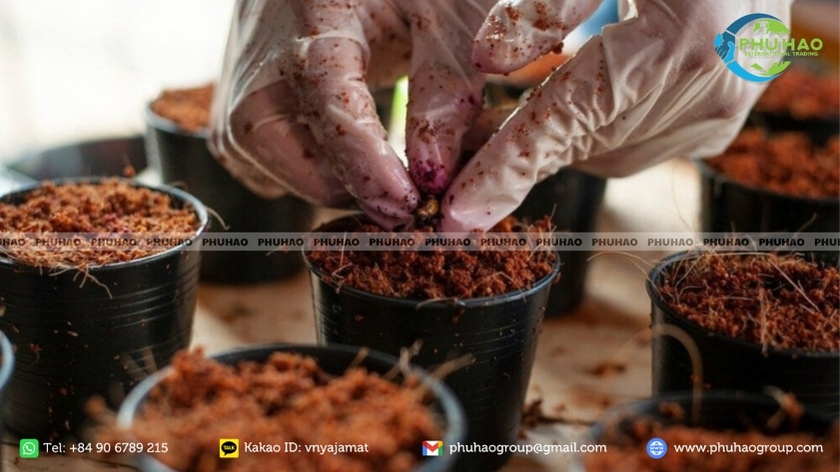
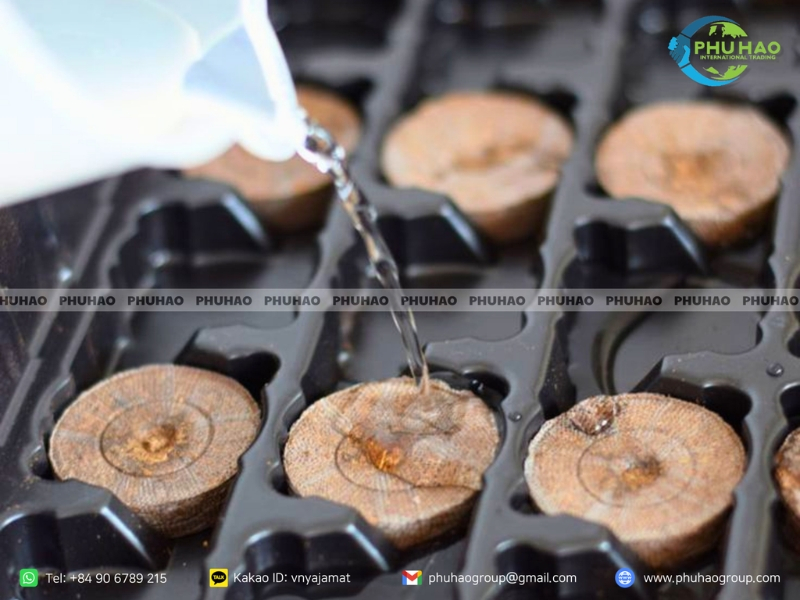
Germinating seedlings in coco peat substrate to benchmark growth rates between washed and unwashed growing media
When evaluating nursery performance, comparing treated coco peat and unwashed raw coco peat highlights how introducing untreated raw coco peat directly into cultivation triggers serious agronomic setbacks for young crops and rootzone ecology.
Natural tannins and lignin in raw coconut husks are highly astringent polyphenolic compounds. While they protect mature coconuts in natural environments, they exhibit severe phytotoxicity toward fragile plant cells. When exposed to irrigation nutrients in growing media, dissolved tannins generate a reducing chemical environment that precipitates respiratory enzymes at delicate root tips. This reaction hardens, browns, and blackens root tips within 48 to 72 hours post-sowing. The loss of functional root hairs disrupts metabolic transport, plunging seedlings into physiological wilting despite ample substrate moisture.
Coconut husks collected from coastal areas and delta river basins accumulate substantial concentrations of sodium (Na+) and chloride (Cl-) ions, driving electrical conductivity (EC) well above 2.5 mS/cm. High levels of free salts in untreated coco peat create reverse osmotic pressure, pulling water outward from root cellular tissues into the surrounding media. Immediate field symptoms include scorched root caps, chlorotic foliage, and necrotic leaf margins. High sodium levels also block calcium and magnesium uptake, stunting stem elongation and leaving roots vulnerable to opportunistic fungal pathogens.
When comparing treated coco peat and unwashed raw coco peat, operational field data reveals substantial hidden expenditure gaps.
Flushing raw coir pith down to a safe EC threshold below 0.5 mS/cm consumes 4 to 6 m3 of clean freshwater per cubic meter of raw material across 3 to 5 leaching cycles over a 10-to-15-day period. Cumulative self-washing water costs, pumping electricity, and labor drive up production expenses significantly when comparing treated coco peat and unwashed raw coco peat.
Rinsing with plain water fails to eliminate the natural cation adsorption pull for calcium and magnesium within the raw coconut fiber complex. Growers must bear additional chemical inputs by flushing with calcium nitrate Ca(NO3)2. Without precise testing instrumentation, manual buffering frequently triggers fertilizer burn or destabilizes substrate pH.
Manual rinsing washes away 20% to 25% of fine, nutrient-holding coir dust in the runoff stream. Discharging dark, tannin-laden effluent directly into local drainage ditches acidifies field soil and contaminates local groundwater tables. In contrast, industrially produced washed/buffered coco peat eliminates environmental discharge issues while delivering guaranteed net volume.
| Comparison Metric | Unwashed Raw Coco Peat | Treated Coco Peat (PHUHAOGROUP) |
| Electrical Conductivity (EC) | Above 2.5 mS/cm (High salinity toxicity risk) | Below 1.0 mS/cm (Low EC Grade) / Below 0.5 mS/cm (RHP / Peat Bag Standard) |
| Tannin & Lignin Residues | Causes root tip hardening and blackening | Thoroughly leached and washed through settling basins |
| Cation Balance | Adsorbs calcium, causes fertilizer loss | Professionally buffered with balanced ion-exchange technology |
| Clean Water Consumption | 4 – 6 m3 / m3 of dry coir pith | 0 Liters (Conserves water resources) |
| Preparation Lead Time | 10 – 15 days of manual soaking and turning | Open bag or hydrate for immediate potting |
| Volume Shrinkage | 20% – 25% loss from washed-out fines | 0% shrinkage; expands to 70 – 75L per 5kg block |
Commercial growers comparing treated coco peat and unwashed raw coco peat consistently discover that purchasing ready-to-use factory media preserves operational cash flow. Methodically comparing treated coco peat and unwashed raw coco peat eliminates volume shrinkage while removing seedling mortality risks.
Implementing on-site protocols for comparing treated coco peat and unwashed raw coco peat enables farm technicians to verify biological root safety before potting seedlings.
Mix a coir sample with distilled water at a 1:1.5 or 1:2 volume ratio, stir thoroughly for 5 minutes, and allow the solution to settle for 15 minutes. Use calibrated electronic digital pens to check key indicators:
Rigorously comparing treated coco peat and unwashed raw coco peat with calibrated analytical meters eliminates subjective visual guesswork.
Standard factory-treated media presents a uniform dark-brown color, an optimal 95/5 blending ratio (95% coir pith to 5% short fiber), and a loose, airy particle matrix. Export-grade compressed blocks maintain moisture strictly between 10% and 15% (capping at 20% to prevent brick hardening), while loose bag packaging holds 40% to 50% moisture. High-grade coir emits an earthy aroma, free from sour fermentation or moldy odors. In contrast, raw coir displays a light yellowish-brown tone caused by unwashed tannins, accompanied by a muddy, sticky texture. Actively comparing treated coco peat and unwashed raw coco peat through hands-on physical assessment allows growers to maintain strict control over inbound cultivation media.
>>> READ MORE: Specifications Of 5kg Compressed Coco Peat Block Export To South Korea: Dimensions And 40HC Container Loading Capacity
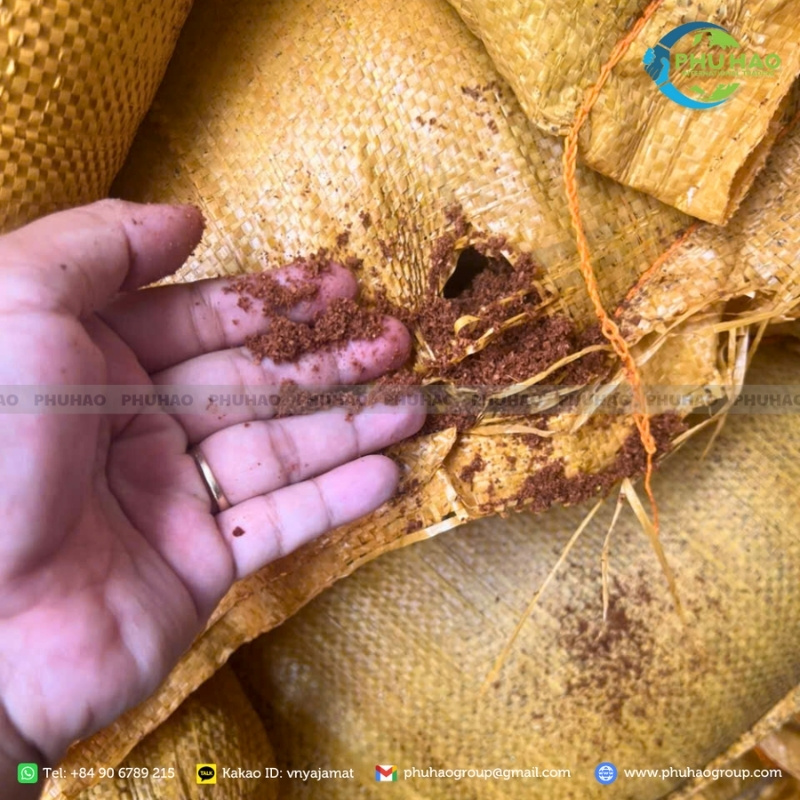
Inspecting color, aeration, and physical particle structure of raw coco peat directly from storage bags prior to substrate formulation
The following technical FAQ provides growers with sound agronomic insights when comparing treated coco peat and unwashed raw coco peat before transplanting:
What harmful compounds does untreated coco peat contain?
Raw coir contains concentrated polyphenolic tannins that precipitate root enzymes, recalcitrant lignin, and high sodium chloride levels that burn tender root caps.
Does washing coco peat on the farm save more money than purchasing treated coco peat?
Purchasing factory-treated coco peat costs less overall because it eliminates excessive water waste, calcium buffering chemicals, labor wages, and particle runoff losses.
Does discharging untreated coco peat wash-water directly onto farm plots cause soil compaction or kill perennial trees?
Yes. Washing runoff carries high sodium concentrations and dissolved tannins that cake topsoil layers, impair soil microbial activity, and cause root toxicity in mature crops.
PHUHAOGROUP supplies standardized coir substrate solutions that eliminate raw agricultural by-product processing across commercial greenhouse operations. When comparing treated coco peat and unwashed raw coco peat, industrial media delivers clear advantages in batch-to-batch uniformity, electrical conductivity maintained below 0.5 mS/cm, and closed-loop calcium-buffered cation exchange. Standardized media conserves clean freshwater, eliminates tedious preparation schedules, and shields seedlings from mineral salt shock. Evaluating media quality ahead of planting season establishes a decisive operational foundation, helping commercial nurseries maximize healthy seedling output while reducing long-term production costs sustainably.
Contact us for a detailed FOB & CNF quotation:
PHU HAO INTERNATIONAL TRADING CO., LTD (PHUHAOGROUP)
📞 Tel/WhatsApp/WeChat/Zalo: +84 906 789 215
📧 Email: phuhaogroup@gmail.com / henry@phuhaogroup.com
🌐 Website: www.phuhaogroup.com
🏬 Alibaba: phuhaogroup.trustpass.alibaba.com
▶️ YouTube: @phuhaogroup

You have0products in your cart
There are no products in the cart.
Total order price