15 Sep, 2026
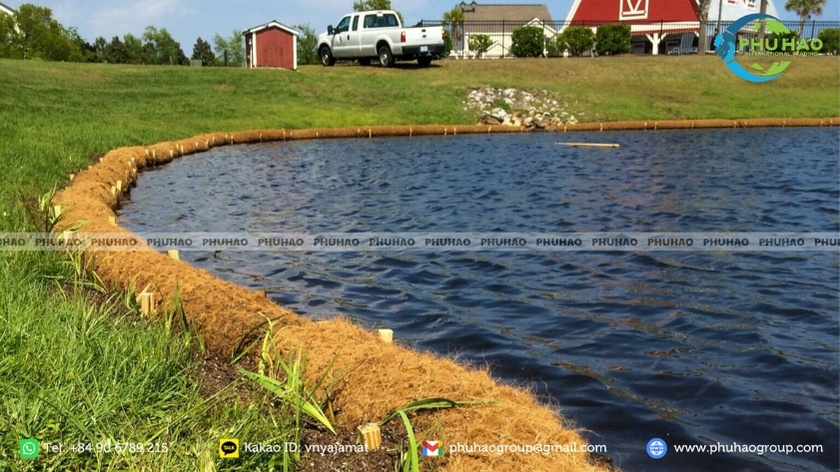
Coir net export to South Korea requires strict quality control systems across every phase, from fiber extraction and twine spinning to machine weaving and export baling. Across the raw material hub of Ben Tre, mechanized processing combined with skilled artisan weaving ensures that each roll retains exceptional tensile strength, meeting rigorous standards for slope greening and erosion control projects. Mastering the physical characteristics of coir net export to South Korea alongside container payload capacity enables enterprises to minimize ocean freight costs.
Coir net export to South Korea meeting certified technical standards consists of natural coconut coir woven fabric strictly maintained under 18% moisture, thoroughly cleaned of organic impurities, and packed under precise baling standards accompanied by phytosanitary and fumigation certificates for customs clearance at Korean ports.
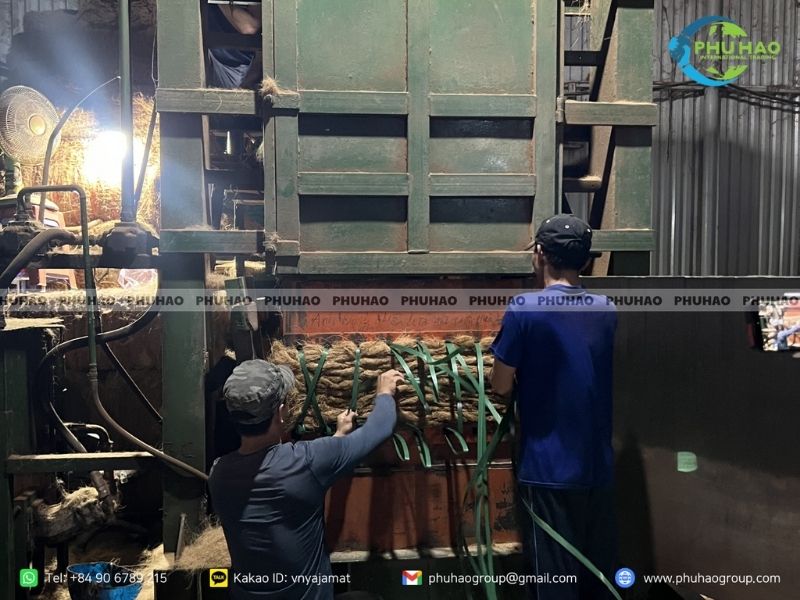
The hydraulic baling process for coir net export to South Korea preserves the woven mesh structure and prevents roll deformation during maritime transit to South Korea
Meeting the rigid technical requirements of Korean general contractors demands strict compliance with verified physical property standards for every shipment of coir net export to South Korea.
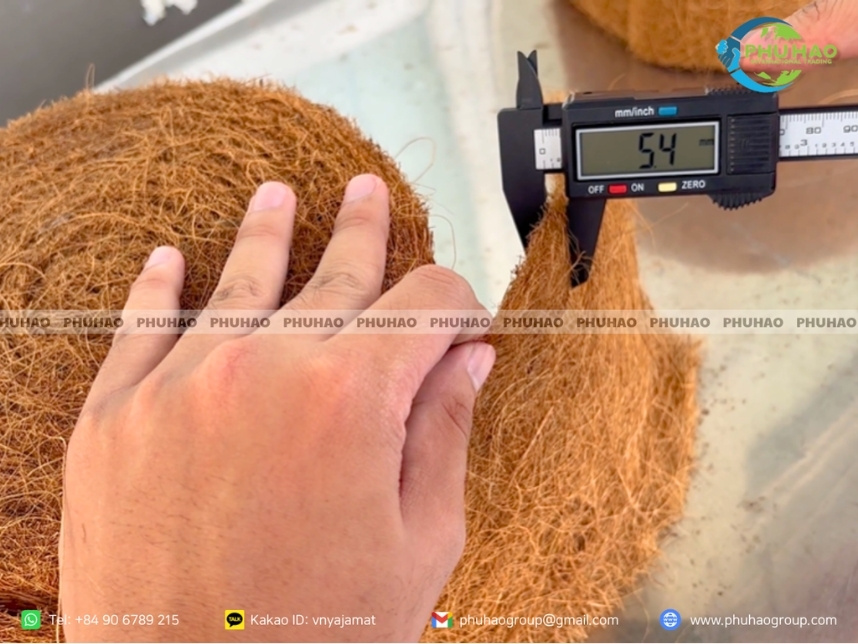
Finished roll dimensions directly dictate rapid on-site slope laying efficiency. Eco-engineering projects in South Korea typically mandate 1m 2m roll width standards to reduce seam overlaps on steep embankment faces. Depending on specific terrain grades and project blueprints, engineers select a flexible 20m 50m length so site teams can roll out the fabric smoothly. The woven coir twine ranges from 3mm to 5mm in diameter, braided into uniform square mesh patterns such as 36×24 lines/m2 or 40×28 lines/m2. This tightly woven lattice ensures that each line of coir net export to South Korea delivers outstanding tensile resistance along vertical slopes.
In export QA/QC workflows, moisture control determines clearance safety and raw fiber durability. International commercial standards require coir net export to South Korea to hold moisture strictly below 18%. Exceeding this limit triggers internal biological heat accumulation, producing roll mildew during long ocean voyages. Fabric basis weight ranges from 225 g/m2 to 700 g/m2, yielding finished roll weights between 5 kg and 30 kg for standard mesh designs to ensure stable ground coverage.
International ocean logistics demands maximum cubic capacity utilization to reduce shipping costs per square meter of material. Manufacturing coir net export to South Korea relies on standardized container loading protocols.
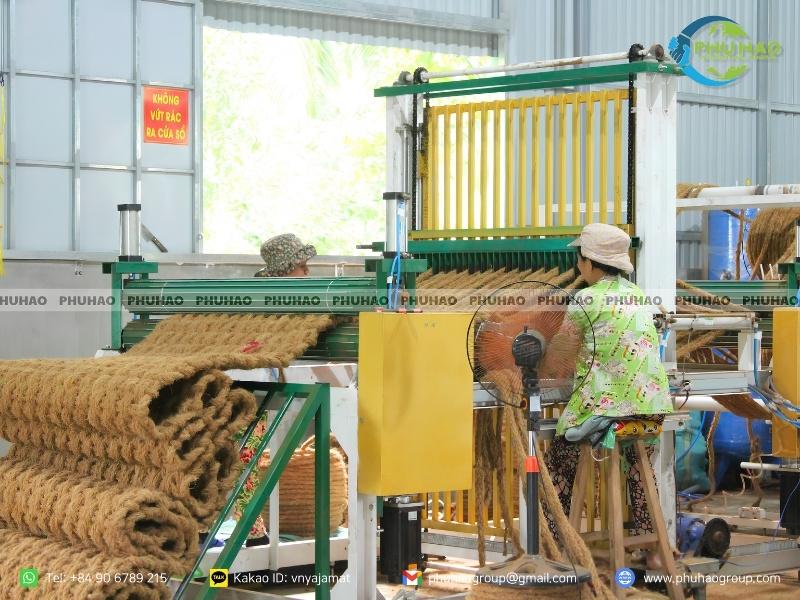
Following visual inspection, automated rollers wind the woven mesh before transferring it to specialized hydraulic presses. The PHUHAOGROUP facility uses heavy-duty bale compression packing, compressing 5 or 6 rolls into a single dense unit. Workers secure the bale using 5 to 7 high-tensile composite strapping bands or galvanized steel bands. This hydraulic volume reduction cuts original roll volume by up to 45%, ensuring that each bundled unit of coir net export to South Korea maintains its structural mesh shape without fiber breakage throughout international logistics handling.
A 40HC container (High Cube) provides roughly 76 CBM of usable volume and supports payloads up to 26.5 metric tons. When loading coir net export to South Korea packed at 5 rolls per bale for standard 2m x 20m rolls, one container accommodates 300 bales, totaling 1,500 finished rolls. Packing 6 rolls per bale increases container payload to 1,848 coir net rolls, reaching a total net weight between 16 and 18 metric tons. This volume completely utilizes container space while staying well within port axle load limits, maximizing operational efficiency for every 40HC container at terminal gates.
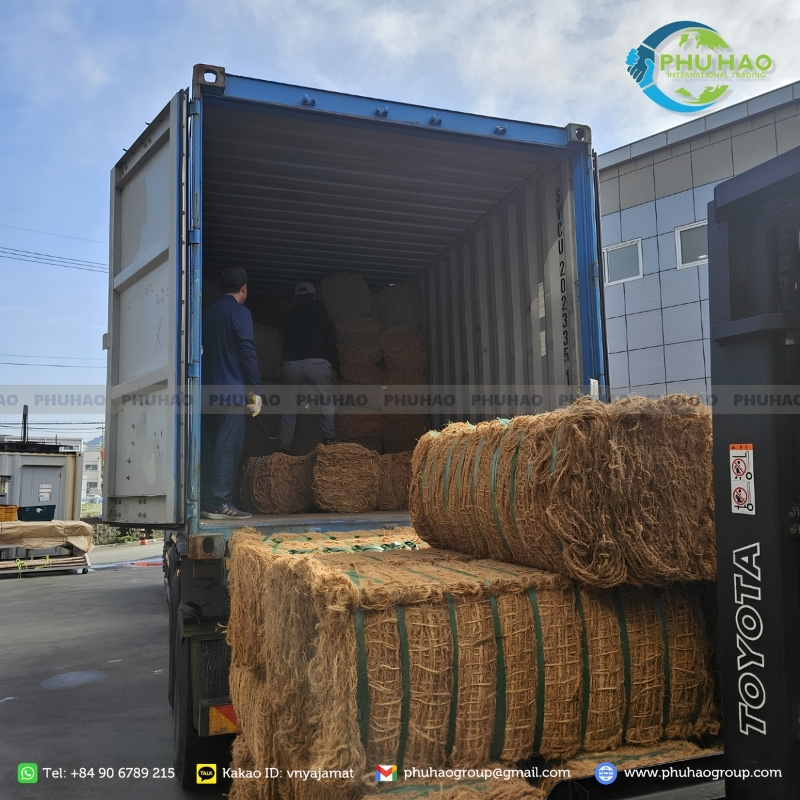
Stuffing capacity reaching 1,500 rolls of coir net export to South Korea packed tightly in compressed bales inside a 40HC container at PHUHAOGROUP logistics depot
Delivering cargo to South Korea follows a transparent Incoterms cumulative cost formula:
CNF Price = EXW Price + Local Charges & Trucking + Ocean Freight
This calculation clarifies each link in the supply chain for coir net export to South Korea prior to vessel departure.
The EXW factory price of coir net export to South Korea reflects raw fiber consumption, machine depreciation, and manual weaving labor. PHUHAOGROUP manages extensive manufacturing facilities across Ben Tre, controlling raw fiber sourcing costs directly without intermediate brokers. Consequently, each roll of coir net export to South Korea maintains a competitive baseline manufacturing cost.
Reference EXW factory estimates, FOB Cat Lai port rates, and CNF Busan/Incheon port pricing:
| Roll Specification | Weaving Construction | Weight / Roll | FOB Cat Lai Price (USD/roll) | CNF Busan / Incheon Price (USD/roll) |
| 1.0m x 20m | 36×24 lines, double x single | 5.0 kg | 3.80 | 4.25 |
| 2.0m x 20m (Standard) | 36×24 lines, double x single | 9.0 kg | 7.00 | 7.50 |
| 1.0m x 20m | 40×28 lines, double x single | 10.0 kg | 8.25 | 8.50 |
| 2.0m x 20m | 40×28 lines, double x single | 18.0 kg | 15.00 | 15.50 |
Note: For customized technical designs and contract roll dimensions, contact PHUHAOGROUP for itemized commercial quotations.
Origin local charges cover container drayage trucking from the Ben Tre plant to Cat Lai port terminals, terminal handling charges (THC), container seal fees, and bill of lading issuance. Alongside electronic customs declarations, securing an official phytosanitary certificate provides mandatory biological compliance clearance. Every shipment of coir net export to South Korea undergoes mandatory methyl bromide fumigation and receives an official Fumigation Certificate matching South Korean quarantine requirements.
Transit time from Cat Lai port to Busan or Incheon port takes 5 to 7 days on direct ocean sailings. By loading 1,500 to 1,848 rolls inside each 40HC container, the ocean freight allocated to each unit drops to roughly 0.25 USD to 0.50 USD per roll. Importers receive transparent, competitive, and fully audited CNF landing costs for every consignment of coir net export to South Korea.
READ MORE: Coir Net Vs Geotextile: Evaluating Cut-Slope Vegetation Restoration
Why do South Korean contractors import coir erosion nets from Vietnam instead of producing domestically?
Vietnam offers abundant raw coir fiber reserves throughout Ben Tre and maintains substantially lower production costs than domestic South Korean manufacturing facilities.
How many rolls of coir net fit into a 40HC container after hydraulic compression?
A single 40HC container holds 1,500 rolls (baled at 5 rolls per unit) or up to 1,848 rolls (baled at 6 rolls per unit) for the standard 2m x 20m size.
Which customs clearance and quarantine documents are required to import coir nets into South Korea?
The standard customs documentation packet includes the Customs Import Declaration, Commercial Invoice, Packing List, Bill of Lading (B/L), Certificate of Origin (C/O), and an official phytosanitary certificate.
Active quality assurance and payload management give coir net export to South Korea its market edge. Through strict moisture control, selective yarn grading, and precision baling, PHUHAOGROUP ships uniform product lots that maintain their natural fiber integrity through discharge at Busan and Incheon terminals. Standardizing technical dimensions and maximizing container space allows ground engineering contractors and importing partners to cut maritime shipping costs significantly.
Contact us for a detailed FOB & CNF quotation:
PHU HAO INTERNATIONAL TRADING CO., LTD (PHUHAOGROUP)
📞 Tel/WhatsApp/WeChat/Zalo: +84 906 789 215
📧 Email: phuhaogroup@gmail.com / henry@phuhaogroup.com
🌐 Website: www.phuhaogroup.com
🏬 Alibaba: phuhaogroup.trustpass.alibaba.com
▶️ YouTube: @phuhaogroup

You have0products in your cart
There are no products in the cart.
Total order price