28 Sep, 2026
Coir log systems serve as the premier choice for international civil contractors managing bank erosion control and canal slope stabilization projects. Manufactured from abundant, high-grade coconut by-products in Ben Tre, Vietnam, the product integrates high mechanical tensile strength with complete natural biodegradability—ideal for green civil engineering standards. Unlike rigid concrete seawalls or riprap revetments that sever riparian hydrological cycles, this compacted coconut fiber matrix establishes a resilient, porous soft buffer. It dissipates hydraulic energy, traps fertile sediment, and establishes permanent vegetation coverage.
Coir log is a cylindrical bio-engineering structure fabricated from dense coconut fibers, purpose-built to retain soil and arrest shoreline erosion along waterways. Mature coconut bristles undergo heavy hydraulic compression before being enclosed in an abrasion-resistant, high-tensile coir netting. This design dampens hydro-dynamic forces, filters fertile silt, and provides a continuous root matrix for perennial vegetation.
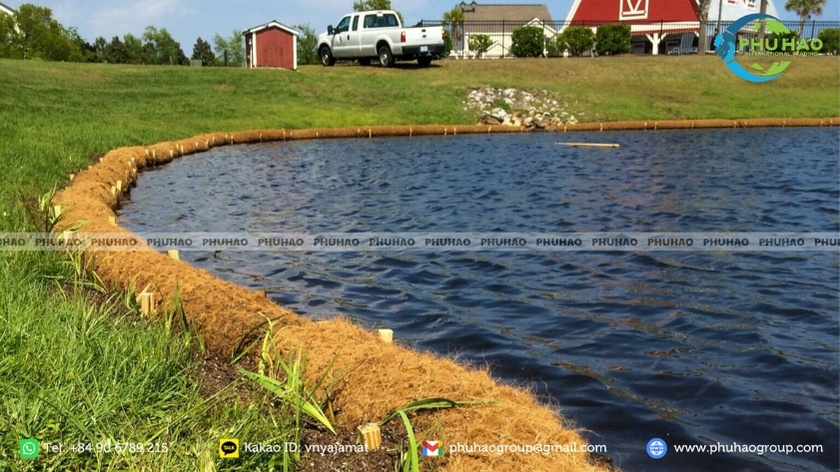
Field installation of high-density coir logs along an embankment edge, secured with hardwood timber stakes to establish a self-sustaining ecological revetment and curb erosion
Coir log units engineered for global distribution require strict standardization of physical dimensions, hydraulic compaction force, and export palletization to withstand diverse tidal swings and flow velocities. Every waterway and catchment basin presents distinct shear stresses that demand certified structural integrity.
Export specifications match standard international civil tender books and field engineering drawings. The reference matrix below outlines typical physical parameters for design consultants and project managers:
| Standard Diameter | Nominal Length | Reference Unit Weight | Engineering Application |
| 30–35 cm | 2.0 m | 17–21 kg | Flexible manual deployment; ideal for narrow stream beds and sharply curved banks. |
| 30–35 cm | 4.0 m | 35–38 kg | Creates continuous run lines, minimizes end-to-end joints, and handles sustained wave action. |
| Custom per project | Per shop drawings | Per target density | Custom-machined to exact tender specifications and owner submittal requirements. |
Because of these precise tolerances, installation crews align adjacent logs flush without structural gaps where concentrated eddies could cause scouring.
Internal compaction density governs structural longevity, with target specifications ranging from 100 kg/m³ to 140 kg/m³. During processing, mature brown coir fibers pass into specialized hydraulic balers that interlock the bristle strands three-dimensionally into a stiff, resilient core. When submerged continuously, a certified coir log preserves its cross-sectional geometry without unravelling, sagging, or flattening under repetitive wave impact.
A hand-woven or machine-spun outer net envelopes the inner core, using natural coir twine with diameters of 5 mm to 8 mm and mesh apertures of 5 cm × 5 cm or 7 cm × 7 cm. At the PHUHAOGROUP facility, technicians pre-line the steel forming cylinders with this high-tensile mesh before packing the fibers. Once the core meets target compaction, skilled craftsmen cinch both ends and stitch the lateral casing closed with continuous coir twine. Combining mechanical compaction with precise knotting ensures even radial stress distribution, holding the cylinder taut under high shear flow velocities.
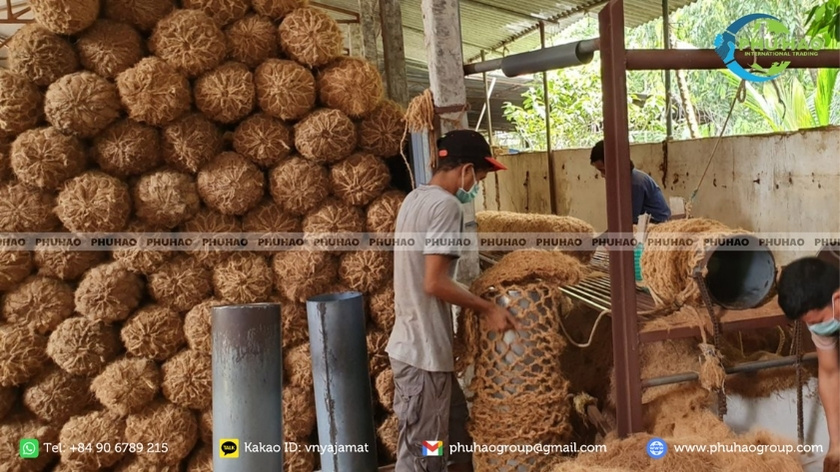
Hydraulic core packing and outer mesh assembly of heavy-duty coir logs at the PHUHAOGROUP manufacturing plant, meeting stringent export requirements
Coir log installations earn high praise from civil engineering associations for dynamic, bio-mechanical shoreline defense that relies on fluid friction rather than rigid obstruction. The system operates directly through fundamental fluid dynamics and sediment transport principles.
The intertwined web of millions of coir bristles forms a porous shock-absorbing matrix. As turbulent currents or wind-driven waves collide with the coir log, water enters the tortuous pore spaces between fibers. Friction converts kinetic wave energy into gentle laminar flow, drastically cutting toe scour and stopping undermining along the embankment slope.
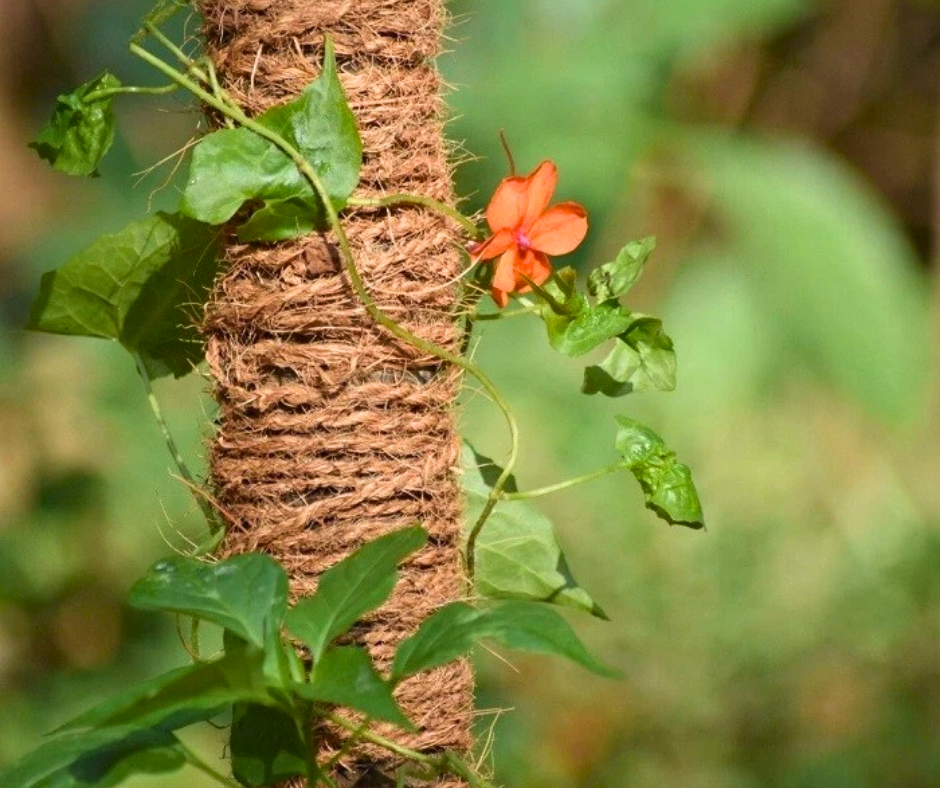
As flow velocity drops through the matrix, suspended alluvial silt and mineral fines settle directly within the fiber core. This ongoing deposition creates a moisture-retaining, nutrient-rich bed that encourages wetland root systems to run straight through the cylinder and penetrate the native subsoil. Over time, the bio-log integrates into an anchored, vegetative riprap that binds the shoreline together indefinitely.
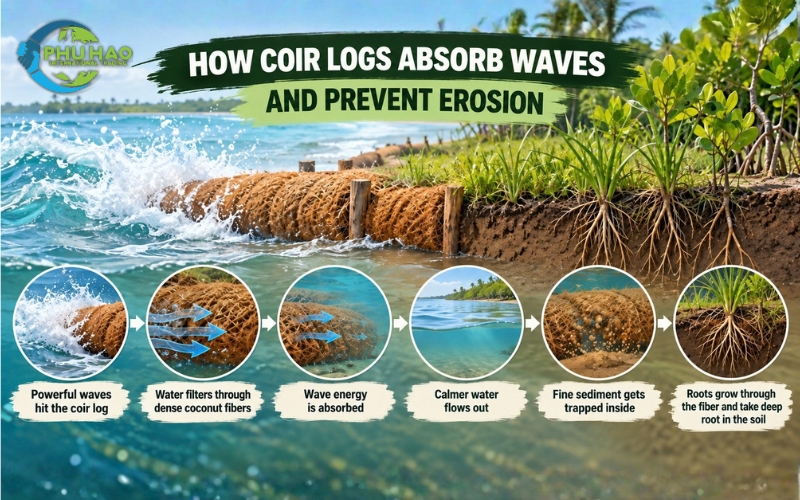
Mechanical process showing wave energy reduction, silt deposition, and plant root penetration through an ecological soft revetment using coir logs
Coir log stability depends on rigorous anchoring protocols during field placement. Construction crews should execute the installation sequence following established geotechnical standards.
Clear all angular rocks, debris, and sharp roots from the shoreline slope before laying materials. Next, excavate a shallow footing trench parallel to the design water line, digging to a depth equal to one-third to one-half of the product’s outer diameter. Partially embedding the core into native soil anchors the line securely, preventing high-velocity undertows from scouring underneath the foundation.
Position the rolls along the trench line, then drive hardwood stakes (such as melaleuca, mature bamboo, or acacia measuring 6–8 cm in diameter) deep into the subgrade on alternating sides. Maintain a stake interval of 1.0 m to 1.5 m on center. Fasten heavy coir twine or UV-treated cord in an X-pattern over the top crown, pinning the roll down firmly against the stake heads. When coupling contiguous runs, abut the ends snugly and lace the outer casings together with heavy-duty coir cord to leave zero gaps for backwash erosion.
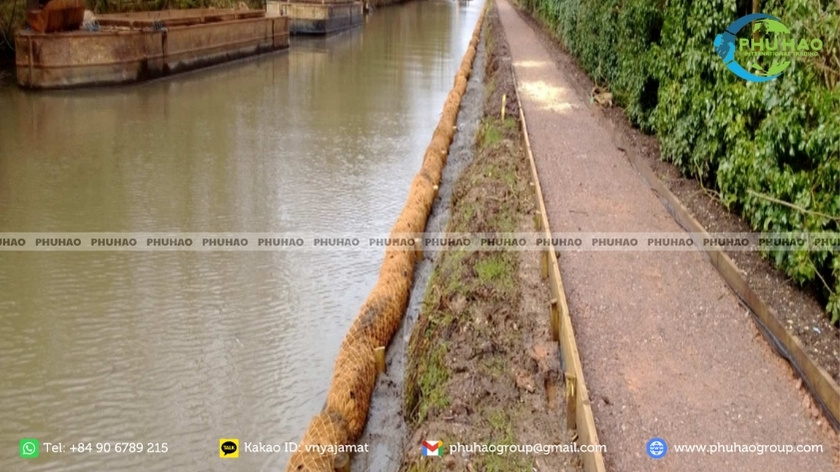
Staggered timber staking secures coir fiber rolls along the water margin, topped with alluvial backfill to accelerate native plant root anchoring
Coir log exports must pass thorough physical and phytosanitary inspections before ocean transit to ensure clean delivery to overseas job sites.
Technicians verify that internal moisture remains strictly under 15% before packing. Keeping moisture low prevents mold growth, premature biodegradation, and anaerobic decay inside closed sea containers. Every export consignment undergoes Methyl Bromide fumigation and receives an official Phytosanitary Certificate for rapid customs clearance. Finished units arrive dry, clean, and free of dirt or non-organic debris.
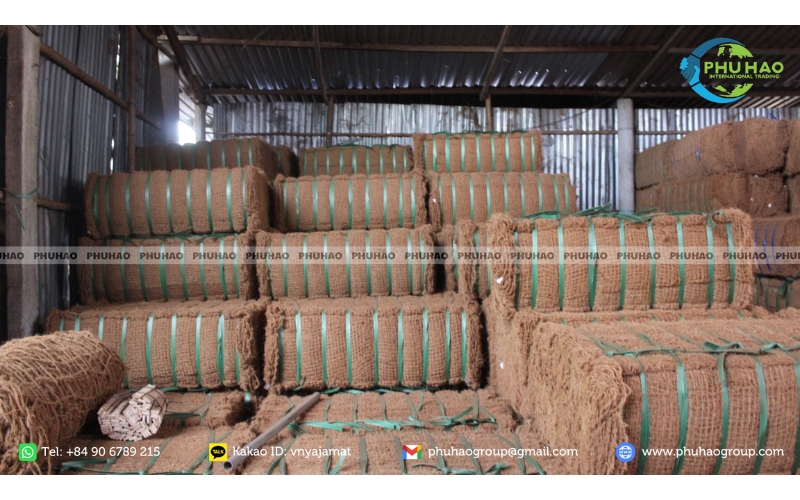
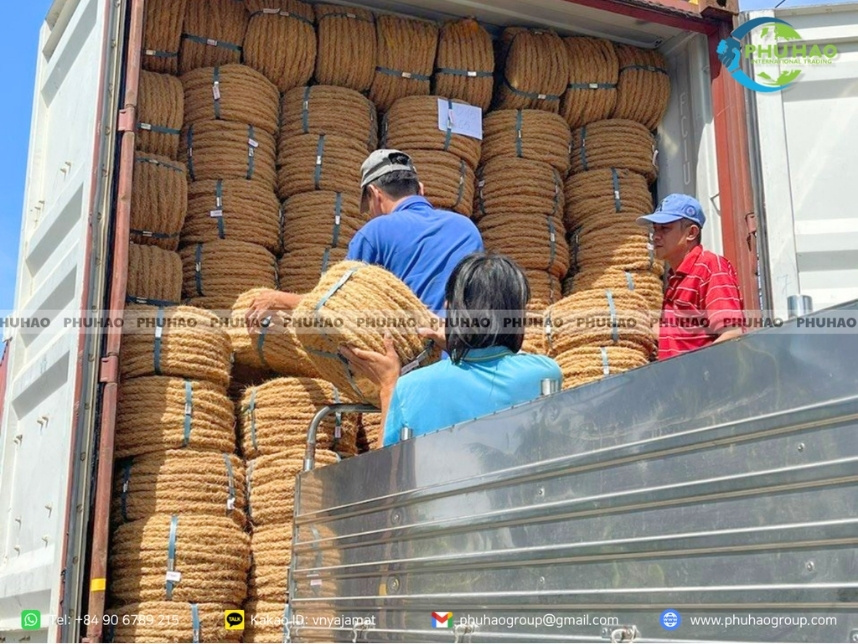
Standard cylindrical profiles maximize volumetric payload within 40-foot High Cube (40HC) containers, lowering landed logistics costs for overseas importers. Cargo handlers stack rolls longitudinally to prevent crushing the bottom tiers. Tight blocking and bracing safeguard structural form during rough ocean voyages. Typical packing configurations run as follows:
| Nominal Dimensions (Diameter × Length) | Reference Unit Weight | Stacking Density / 40HC Container | Export Packaging Method |
| 30–35 cm × 2 m | 17–21 kg/roll | 360 rolls | Cylindrical bundle, heavy-duty banding strap |
| 30–35 cm × 4 m | 35–38 kg/roll | 180 rolls | Cylindrical bundle, heavy-duty banding strap |
How long does a coir log last submerged before naturally decomposing?
The compressed core keeps its structural integrity in water for 3 to 5 years, providing ample time for riparian plants to build thick, permanent root systems.
Which grasses or aquatic plants establish best within coir fiber casings?
Vetiver grass, common reed (Phragmites australis), umbrella palm, and goosegrass excel because their extensive root networks rapidly bind soil along wet banks.
Does organic decomposition change water pH or pollute sensitive aquatic habitats?
Manufactured purely from organic coconut husks, the material breaks down into neutral humus, safeguarding local water quality and aquatic wildlife.
Is natural coir netting superior to synthetic polypropylene outer netting?
Natural coir mesh breaks down alongside the inner core at a matched rate, leaving behind zero microplastics or synthetic debris in the surrounding waterway.
Where can contractors source certified coir logs in bulk quantities?
Contact PHUHAOGROUP at +84 90 6789 215 for direct factory pricing, production schedules, and complete export technical documentation.
Agricultural coir by-products from Ben Tre provide a sustainable foundation for modern civil drainage and bank revetment projects. The coir log serves simultaneously as an impact-absorbing wave break and a natural sediment trap that speeds plant growth. Choosing these natural rolls solves persistent toe-scour problems, cuts down costly concrete works, and shrinks project carbon footprints. Shorelines retain their natural contours while building resilience against extreme weather. Contact the PHUHAOGROUP field engineering team at +84 90 6789 215 for custom manufacturing submittals, container rates, or project sizing support.
Contact us for a detailed FOB & CNF quotation:
PHU HAO INTERNATIONAL TRADING CO., LTD (PHUHAOGROUP)
📞 Tel/WhatsApp/WeChat/Zalo: +84 906 789 215
📧 Email: phuhaogroup@gmail.com / henry@phuhaogroup.com
🌐 Website: www.phuhaogroup.com
🏬 Alibaba: phuhaogroup.trustpass.alibaba.com
▶️ YouTube: @phuhaogroup
You have0products in your cart
There are no products in the cart.
Total order price