12 Dec, 2025
Coir netting, made from natural coconut fiber, is an eco-friendly and effective solution for erosion control, landscaping, and establishing vegetation. Below is a concise guide that covers what coir netting is, its benefits, common uses, and a step-by-step installation method.
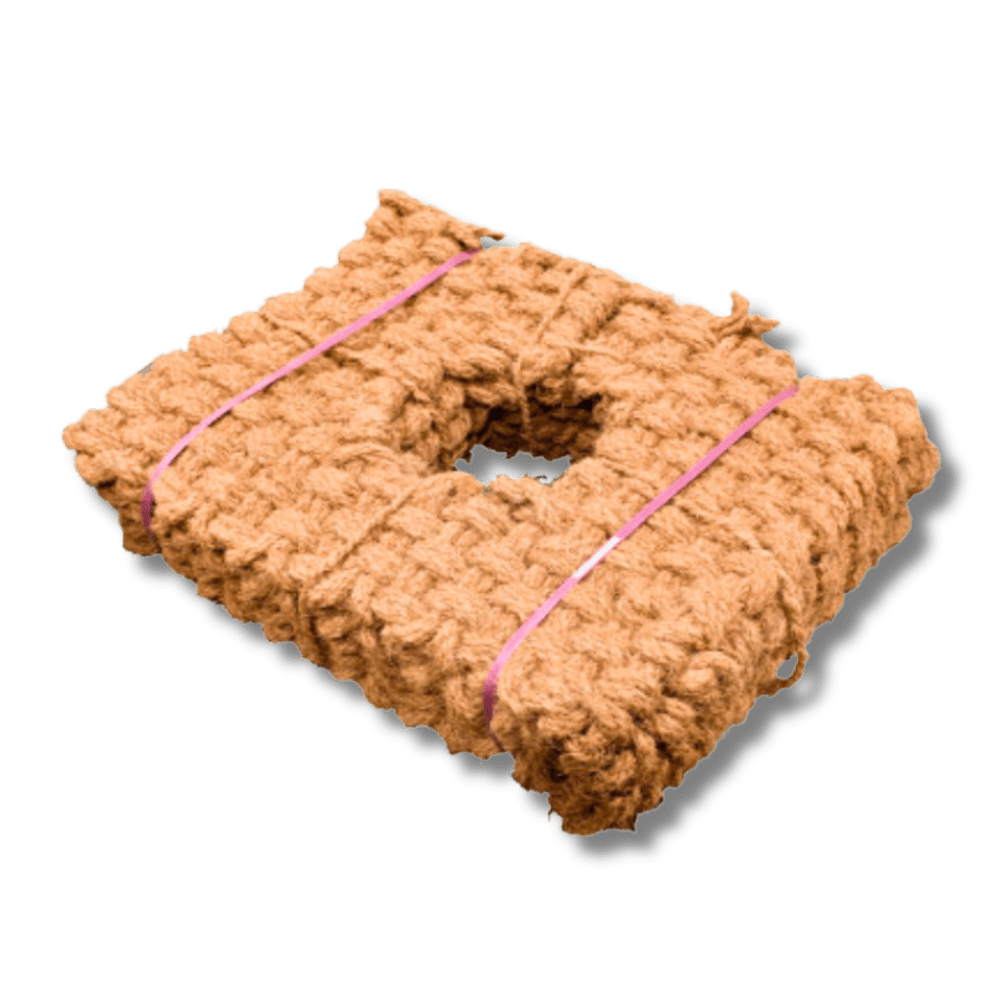
Coir netting is a durable mesh made from coconut coir fibers (the outer husk). The woven structure is supplied in rolls and laid over soil surfaces to protect and stabilize the ground while allowing plants to grow through it.
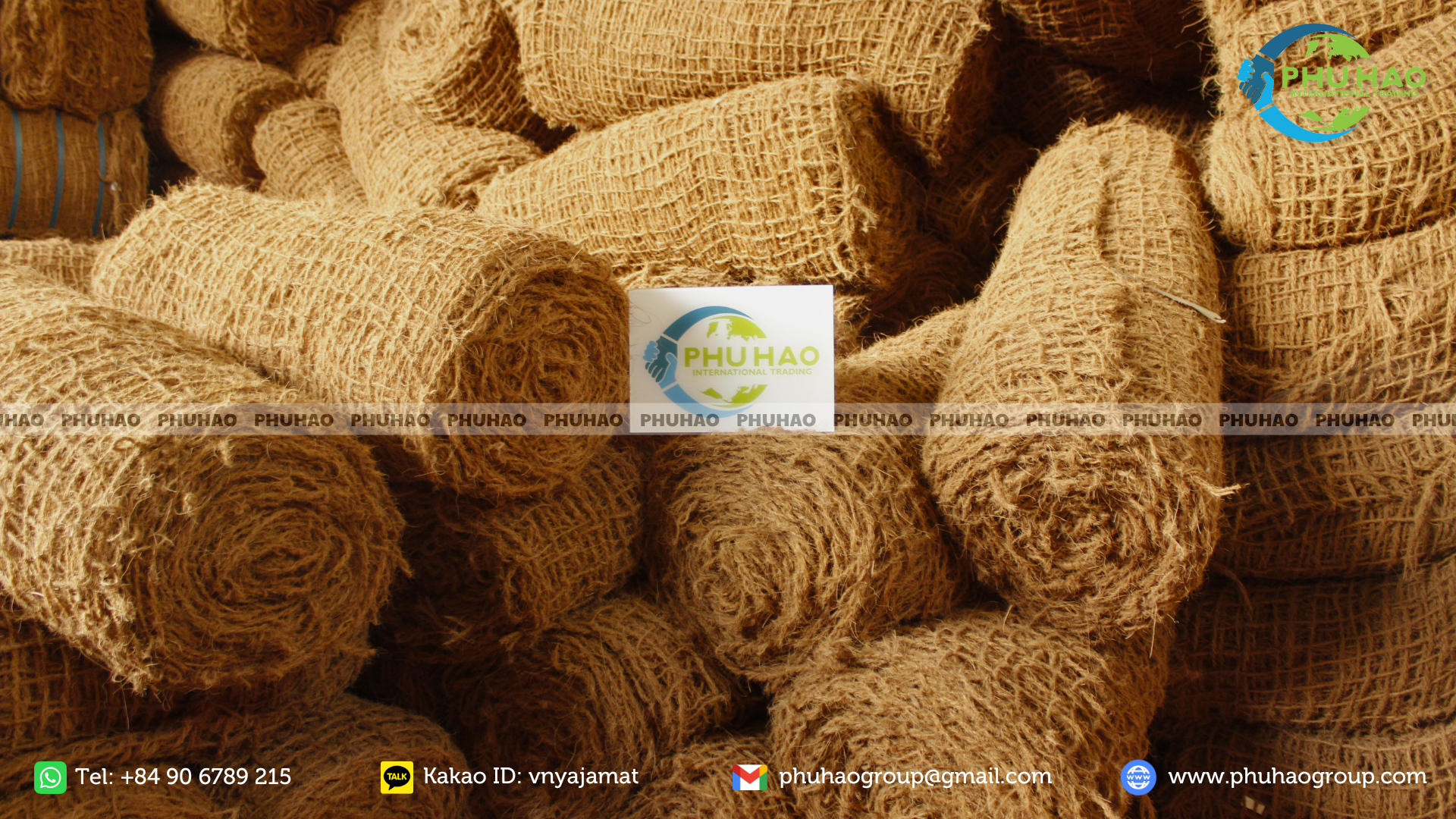
Coir netting commonly comes in different weights (gsm = grams per square meter), for example:
400 gsm: lightweight, faster biodegradation, best for temporary seed protection.
700 gsm: medium strength, good balance of longevity and biodegradability.
900 gsm: heavy-duty, longest lasting for steeper slopes and harsh conditions.
Natural benefits
Biodegradable & eco-friendly: breaks down naturally and enriches soil.
Strong fiber: provides temporary structural support until vegetation establishes.
Soil-friendly: allows water, air, and roots to pass through.
Coir netting is widely chosen for outdoor and environmental projects because it offers both strong performance and natural sustainability:
• Controls soil erosion: The sturdy coconut fiber mesh holds soil firmly in place, preventing washout on slopes, embankments, and disturbed ground.
• Supports natural plant growth: The open-weave design allows sunlight, water, and air to reach the soil while giving roots room to grow through the netting and stabilize the area naturally.
• Safe for waterways and wildlife: Unlike synthetic materials, coir is biodegradable and non-toxic, posing no entanglement risk and leaving no plastic waste behind.
• Long-lasting in outdoor conditions: Coir netting can last from several months to several years, depending on the GSM and climate, which is long enough for vegetation to establish fully.
• Retains moisture and enriches soil: Coir fibers naturally hold water, helping seeds germinate and reducing the need for frequent watering. As the material breaks down, it adds organic matter back into the soil.
Coir netting is highly versatile and suitable for a wide range of outdoor and environmental applications. Its natural strength and biodegradability make it ideal for both small garden projects and large-scale restoration work:
• Slopes & embankments: Used to stabilize hillsides, prevent soil erosion, and reduce the risk of landslides.
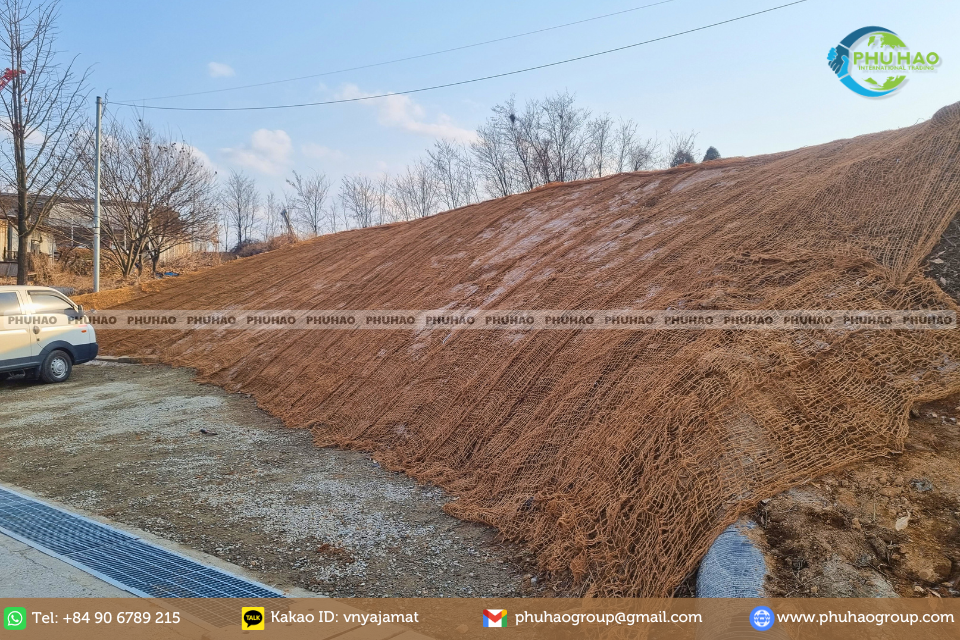
• Riverbanks & canals: Helps protect shorelines from water erosion while supporting vegetation growth along riparian areas.
• Roadside projects: Commonly installed on cut-and-fill slopes to prevent soil loss and encourage natural ground cover.
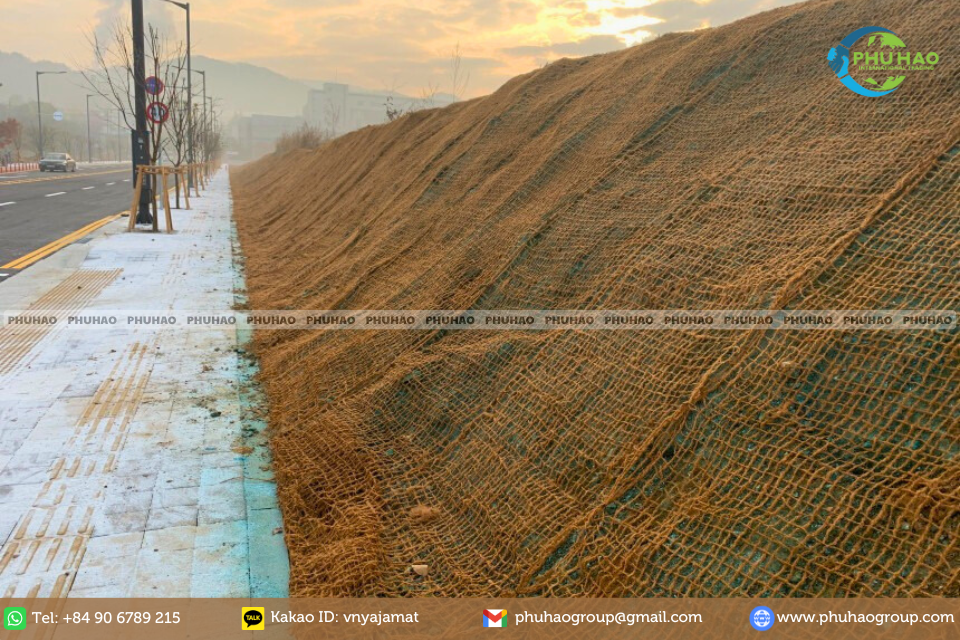
• Garden beds & home landscaping: Keeps mulch in place, protects seedlings, and prevents soil from washing away after rain.
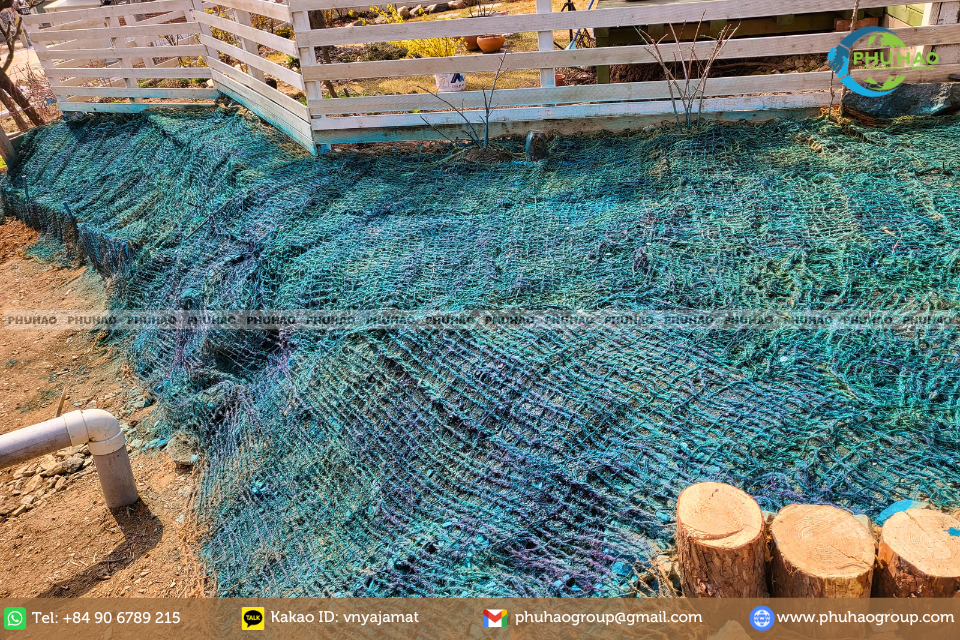
• Reforestation & eco-restoration projects: Provides a supportive layer for young plants, helping restore degraded land and promote biodiversity.
• Construction sites: Acts as a temporary erosion-control solution, retaining topsoil during site development and landscaping.
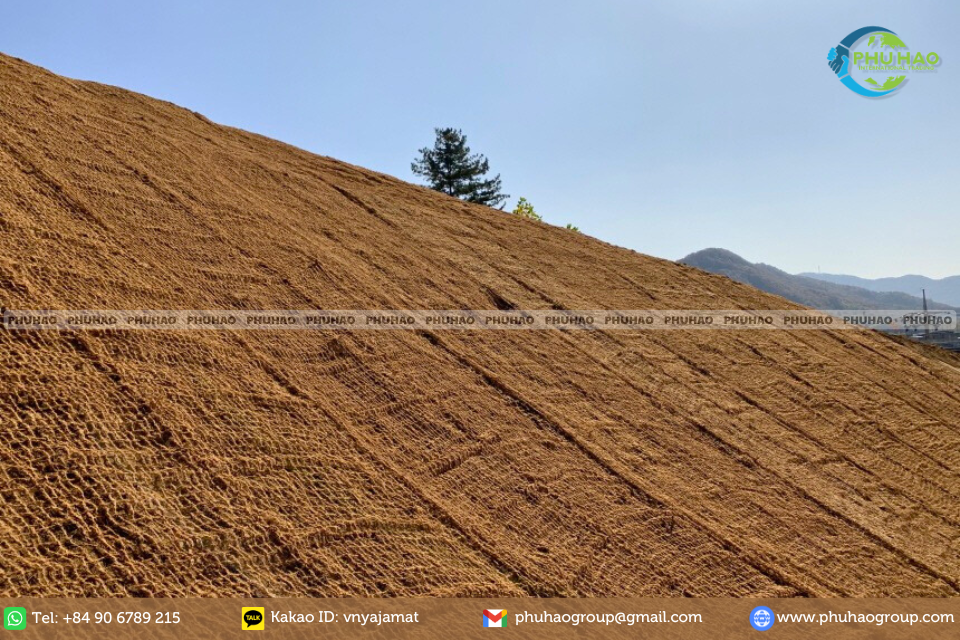
Installing coir netting is easy and can be applied to private gardens, farms, or large outdoor projects. Follow this simple, beginner-friendly guide:
Before installation, gather all necessary tools:
Coir netting roll(s)
Wooden, bamboo, or steel stakes
Biodegradable ties or wire
Hammer or mallet
Scissors or utility knife
Grass seeds or seedlings (optional)
Watering can or hose
Next, inspect the terrain:
Check slope steepness, soil moisture, and uneven ground
Remove rocks, debris, and weeds
Choose a dry day for easy installation
Clear the area thoroughly
Lightly level the soil (do NOT compact)
Fill any dips to prevent water pooling
If planting grass, sprinkle seeds first
Start from the top of the slope and roll downward
Ensure the netting stays flat and touches the soil completely
Avoid stretching or twisting the netting
Overlap side edges by 10–15 cm
Overlap top and bottom edges by 20 cm
Secure overlaps using ties or stakes
Proper overlapping prevents erosion and wind uplift.
Anchor with stakes every 1 meter on flat surfaces
On slopes: stake every 50–70 cm
Reinforce corner areas and high-wind zones with extra stakes
For seedlings: cut small openings in the netting and plant directly
For grass: sprinkle seeds evenly over the netting
Add a thin layer of soil to increase seed contact
Coir netting helps protect seeds from birds and wind.
Water the area gently to help the netting settle
After heavy rain, check for:
Loose edges
Lifted corners
Soil displacement
Re-secure with additional stakes if needed.
Phu Hao uses premium coconut fibers sourced from Vietnam’s top coconut-growing regions. Our fibers are:
Clean
Strong
Salt-washed
Environmentally safe
We operate advanced weaving and quality-control systems to ensure:
Uniform mesh size
Consistent GSM
Strong knots
Reliable roll length & packaging
Our coir netting is packed for long-distance export:
Compressed, wrapped, strapped
Labeled by GSM, size, and lot number
Container-optimized loading
Available GSM includes:
400 GSM
700 GSM
900 GSM
Custom sizes are also available
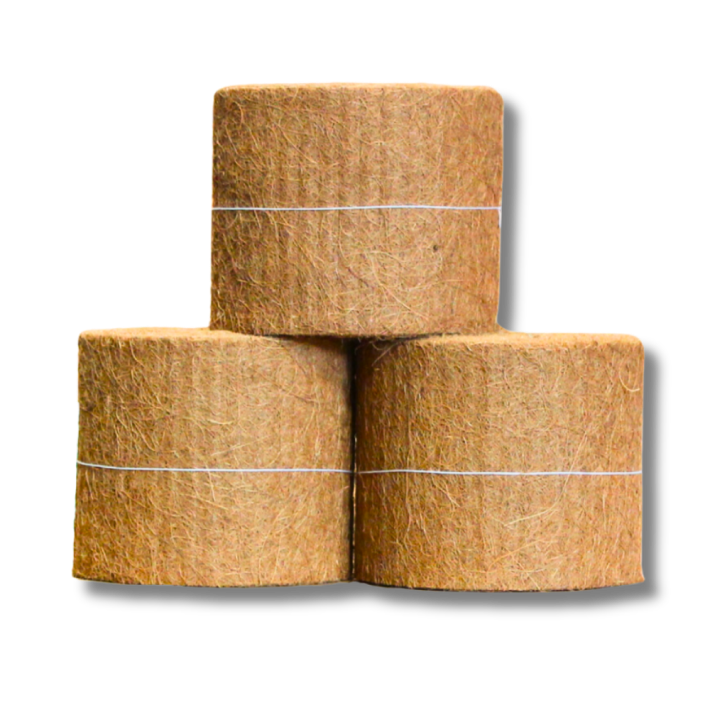
We also supply coir logs, coir mats, cocopeat, and related products.
Phu Hao supports buyers with:
Quick quotation
Sample availability
Flexible MOQ (full container)
Export documentation support
If you are looking for a dependable coir netting manufacturer for long-term business, Phu Hao is ready to be your trusted partner.
Coir netting is one of the most effective, sustainable solutions for erosion control and land rehabilitation. With the right preparation and installation steps, you can ensure long-lasting protection and successful vegetation growth.
Phu Hao is proud to supply high-quality coir netting products for global markets, supporting both environmental sustainability and engineering efficiency.
Tel: +84 906 789 215
Email: phuhaogroup@gmail.com / henry@phuhaogroup.com
Website: 𝐰𝐰𝐰.𝐩𝐡𝐮𝐡𝐚𝐨𝐠𝐫𝐨𝐮𝐩.𝐜𝐨𝐦
Alibaba: 𝐡𝐭𝐭𝐩𝐬://𝐩𝐡𝐮𝐡𝐚𝐨𝐠𝐫𝐨𝐮𝐩.𝐭𝐫𝐮𝐬𝐭𝐩𝐚𝐬𝐬.𝐚𝐥𝐢𝐛𝐚𝐛𝐚.𝐜𝐨𝐦/
YouTube: 𝐡𝐭𝐭𝐩𝐬://𝐰𝐰𝐰.𝐲𝐨𝐮𝐭𝐮𝐛𝐞.𝐜𝐨𝐦/@𝐩𝐡𝐮𝐡𝐚𝐨𝐠𝐫𝐨𝐮𝐩

You have0products in your cart
There are no products in the cart.
Total order price