07 Jan, 2026
Whether you are a homeowner dealing with a receding lakefront or a contractor managing a commercial construction site, soil erosion is a persistent and costly enemy. Traditional solutions, such as concrete walls or heavy rocks (riprap), can be expensive and disruptive to local ecosystems.
Discover the Coir Log, a sustainable and high-performance solution that harnesses nature’s power to stabilize the land. In this guide, we will explore what coir logs are, their effectiveness, and the proper installation process.
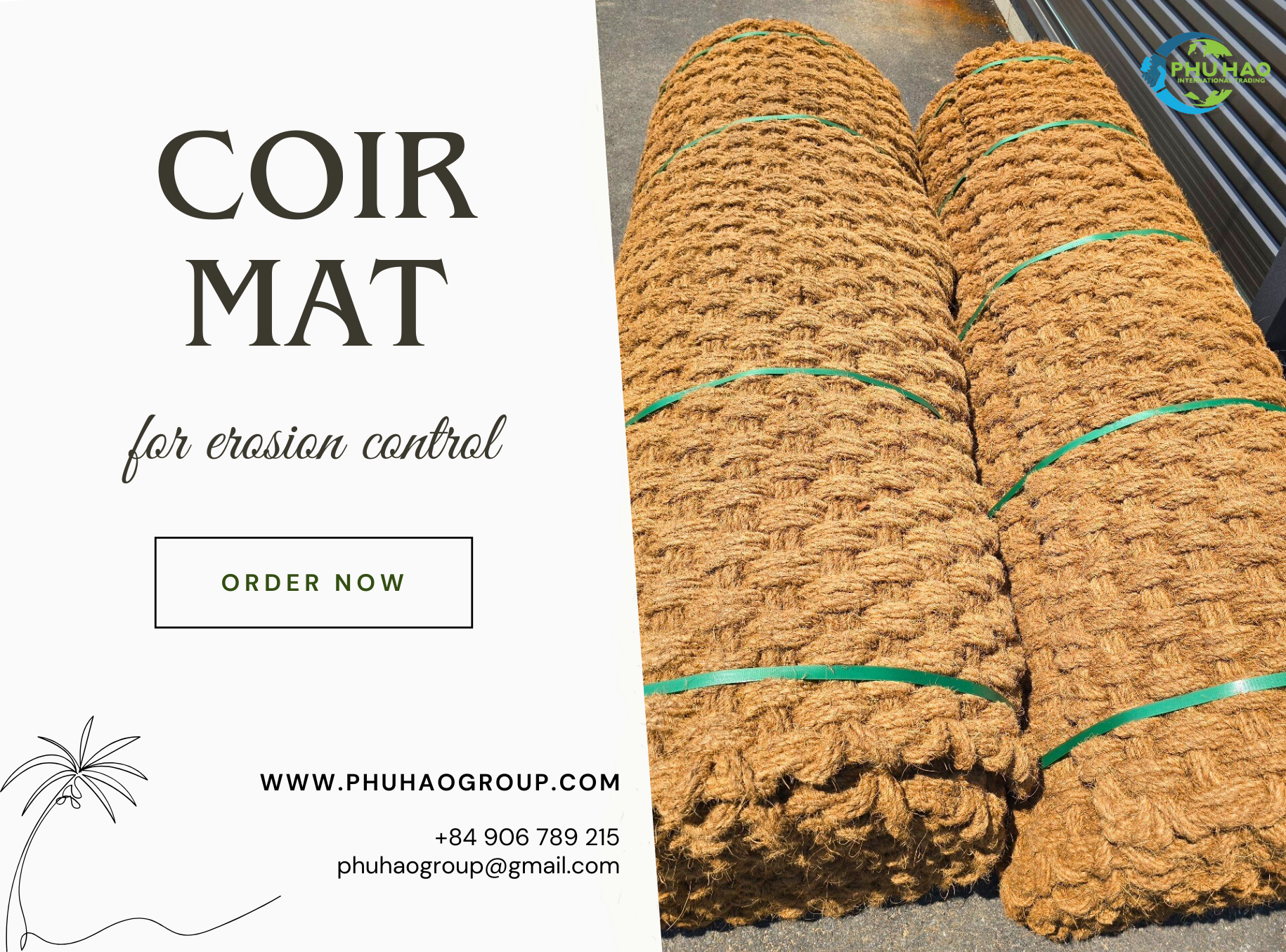
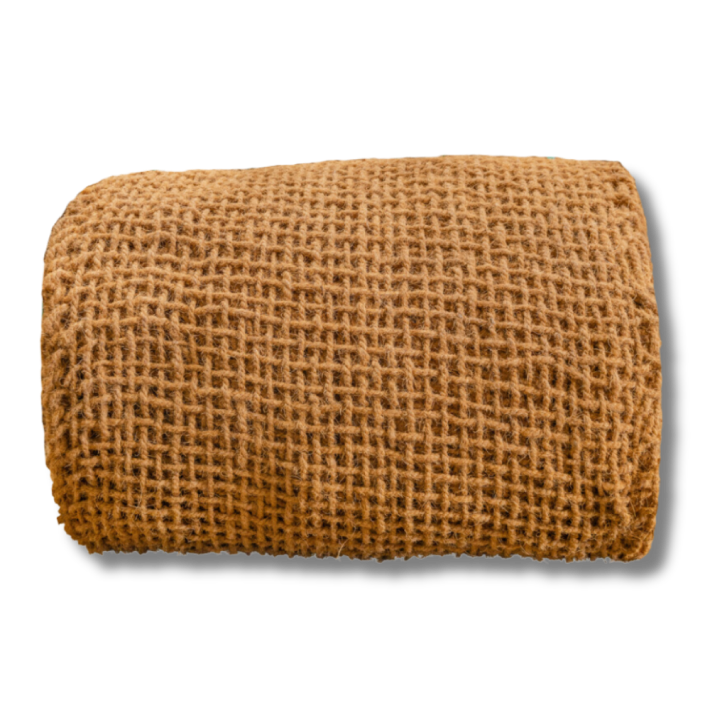
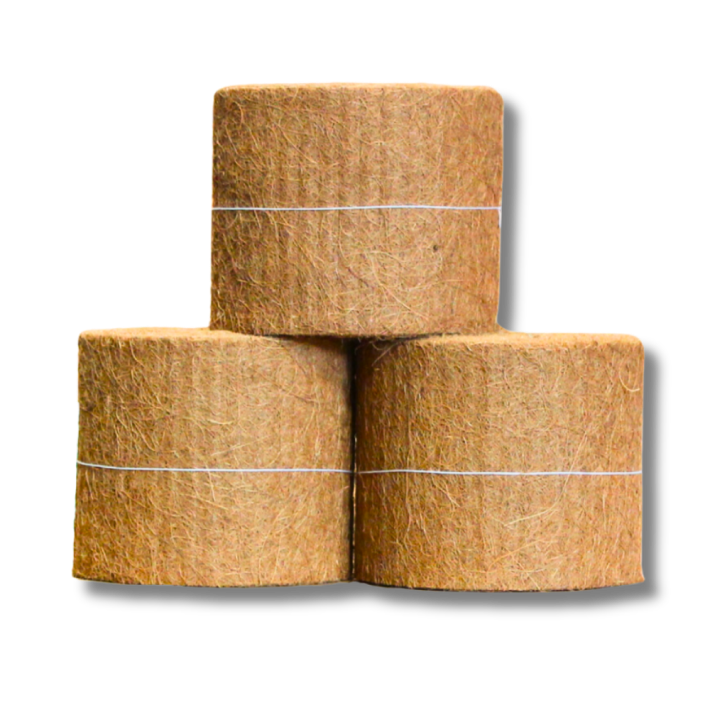
A coir log is a long, cylindrical roll made from compressed coconut fibers (coir). These fibers are a byproduct of the coconut industry, making them a renewable resource. The loose fibers are stuffed into a mesh netting, also typically made of coconut twine, to create a dense “log” that is both flexible and incredibly sturdy.
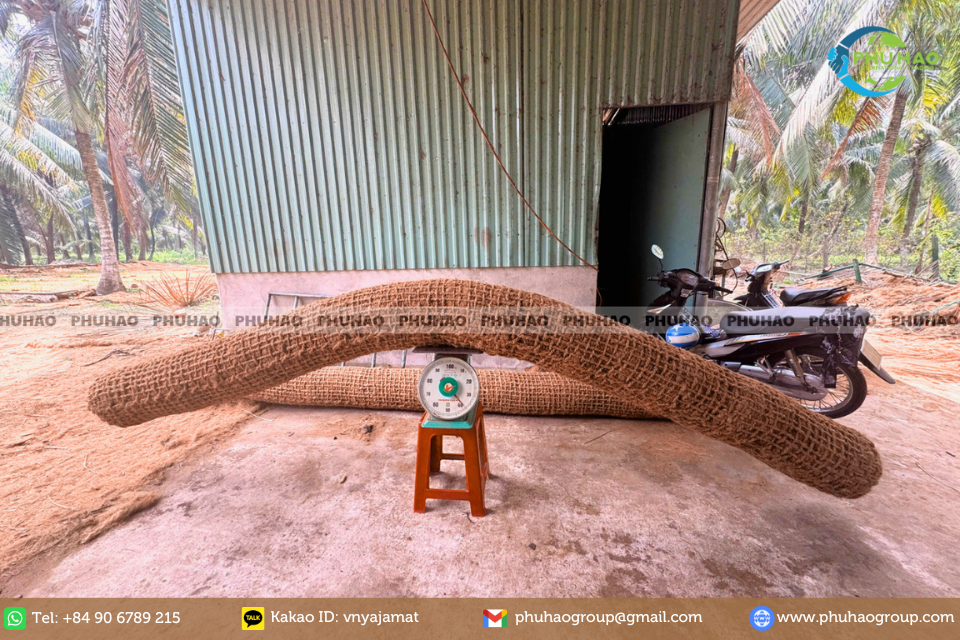
Unlike plastic silt fences, coir logs are 100% biodegradable. Over the course of 2 to 5 years, the log will slowly break down, enriching the soil with organic matter. By the time the log has decomposed, the vegetation planted around it will have established a deep root system to take over the job of stabilizing the area.
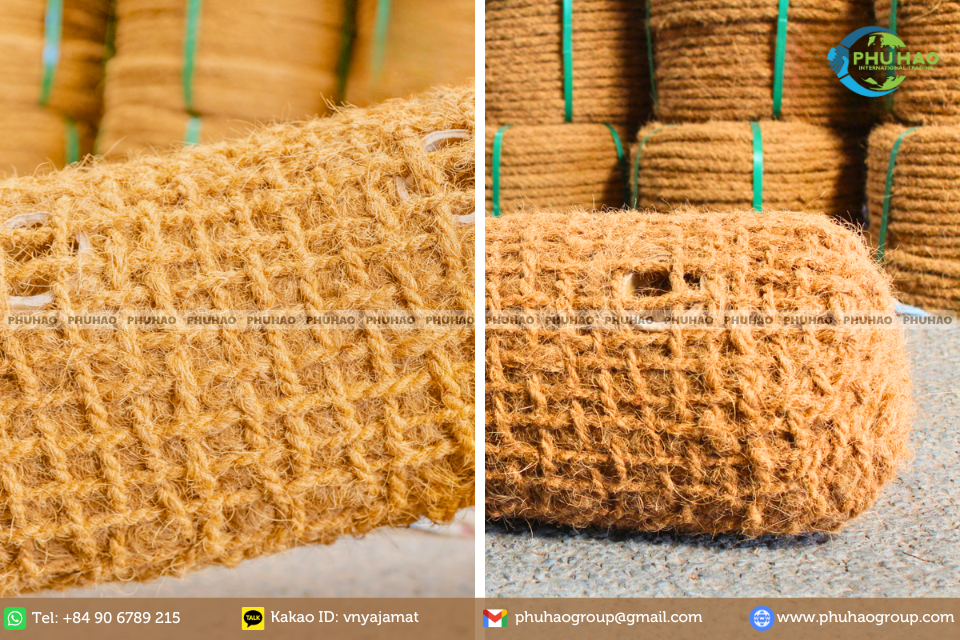
Coir logs allow water to seep through slowly while trapping sediment. This prevents “undercutting,” where water flows beneath a barrier and washes away the soil.
Coconut fiber can hold up to 10 times its weight in water, providing a moist environment that helps new plants thrive.
Because they are made of natural materials, they don’t trap small animals (like snakes or frogs) the way plastic netting can.
Once installed and planted, coir logs blend seamlessly into the landscape, eventually disappearing entirely under a blanket of lush greenery.
Shoreline Restoration: Buffering the energy of waves on lake or pond banks.
Stream Bank Stabilization: Preventing the “slumping” of soil into moving rivers.
Slope Management: Creating “check dams” on hillsides to slow down rushing rainwater.
Wetland Protection: Creating a perimeter for delicate marshland restoration projects.
To ensure your coir log doesn’t wash away during the first heavy rain, follow these critical installation steps:
Don’t just lay the log on top of the ground. Dig a shallow trench, roughly 1/3 the diameter of the log, along the waterline or slope. This “cradles” the log and prevents water from flowing underneath it.
Place the logs in the trench. If you are using multiple logs, ensure the ends are joined tightly together. You can even “lace” the ends together with coir twine to ensure there are no gaps for water to exploit.

Use heavy-duty wooden stakes to pin the log in place.
Pattern: Stake on both sides of the log in a “staggered” or “zigzag” pattern.
Spacing: Place stakes every 2 to 3 feet for high-flow areas.
Binding: Drive the stakes down until they are nearly flush, then use twine to create a “bridge” over the log between the two stakes.

Fill the space behind the log (on the land side) with soil. This is the perfect time to add “plugs” of native grasses, rushes, or sedges. You can plant them directly into the soil behind the log or even tuck them into the crevices of the fiber itself.
Coir logs are designed to be “set and forget,” but a quick check after the first few major storms is wise. Ensure the stakes are still firm and that water isn’t carving a path around the ends of the logs.
As the months pass, you will notice the log darkening and becoming a part of the bank. By the time the netting breaks down, your plants should be mature enough to hold the line on their own.
Tel: +84 906 789 215 (WhatsApp/WeChat/Zalo)
Email: phuhaogroup@gmail.com / henry@phuhaogroup.com
Website: 𝐰𝐰𝐰.𝐩𝐡𝐮𝐡𝐚𝐨𝐠𝐫𝐨𝐮𝐩.𝐜𝐨𝐦
Alibaba: 𝐡𝐭𝐭𝐩𝐬://𝐩𝐡𝐮𝐡𝐚𝐨𝐠𝐫𝐨𝐮𝐩.𝐭𝐫𝐮𝐬𝐭𝐩𝐚𝐬𝐬.𝐚𝐥𝐢𝐛𝐚𝐛𝐚.𝐜𝐨𝐦/
YouTube: 𝐡𝐭𝐭𝐩𝐬://𝐰𝐰𝐰.𝐲𝐨𝐮𝐭𝐮𝐛𝐞.𝐜𝐨𝐦/@𝐩𝐡𝐮𝐡𝐚𝐨𝐠𝐫𝐨𝐮𝐩
You have0products in your cart
There are no products in the cart.
Total order price